Section 3.6
Test #5 Leak Test
Perform the following test set-up and test to determine if and where the fuel system is leaking.
Section 3.6.1
Test #5 Set-Up
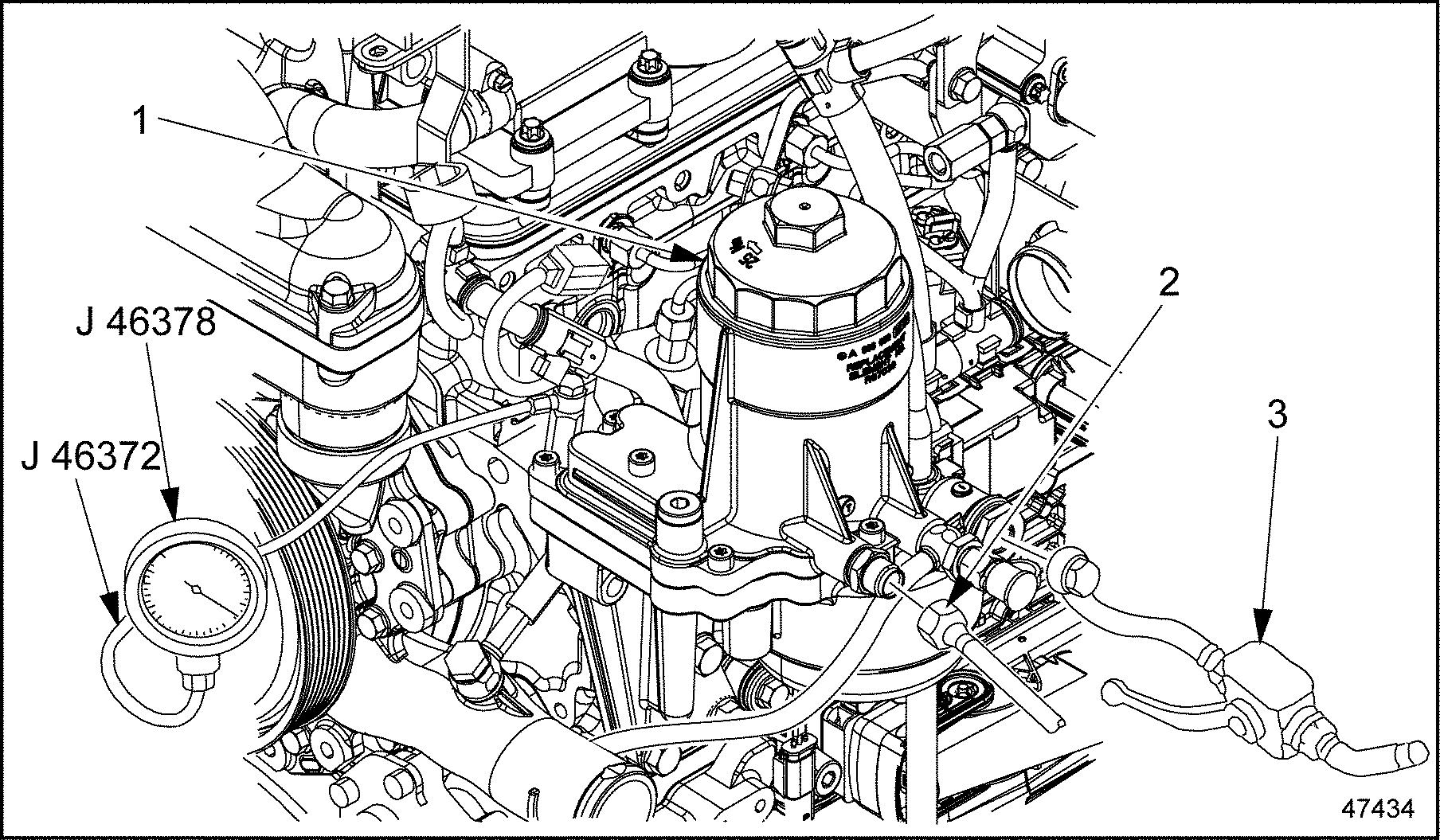
See Figure "Test Setup #5 Leak Test"
|
1. Main Filter Housing |
3.Shutoff Valve from Adapter kit J-46377-A |
|
2. Fuel Return Line to Tank |
Figure 1. Test Setup #5 Leak Test
- Disconnect the fuel temperature sensor harness connector. See Figure
"Disconnecting the Sensor"
.
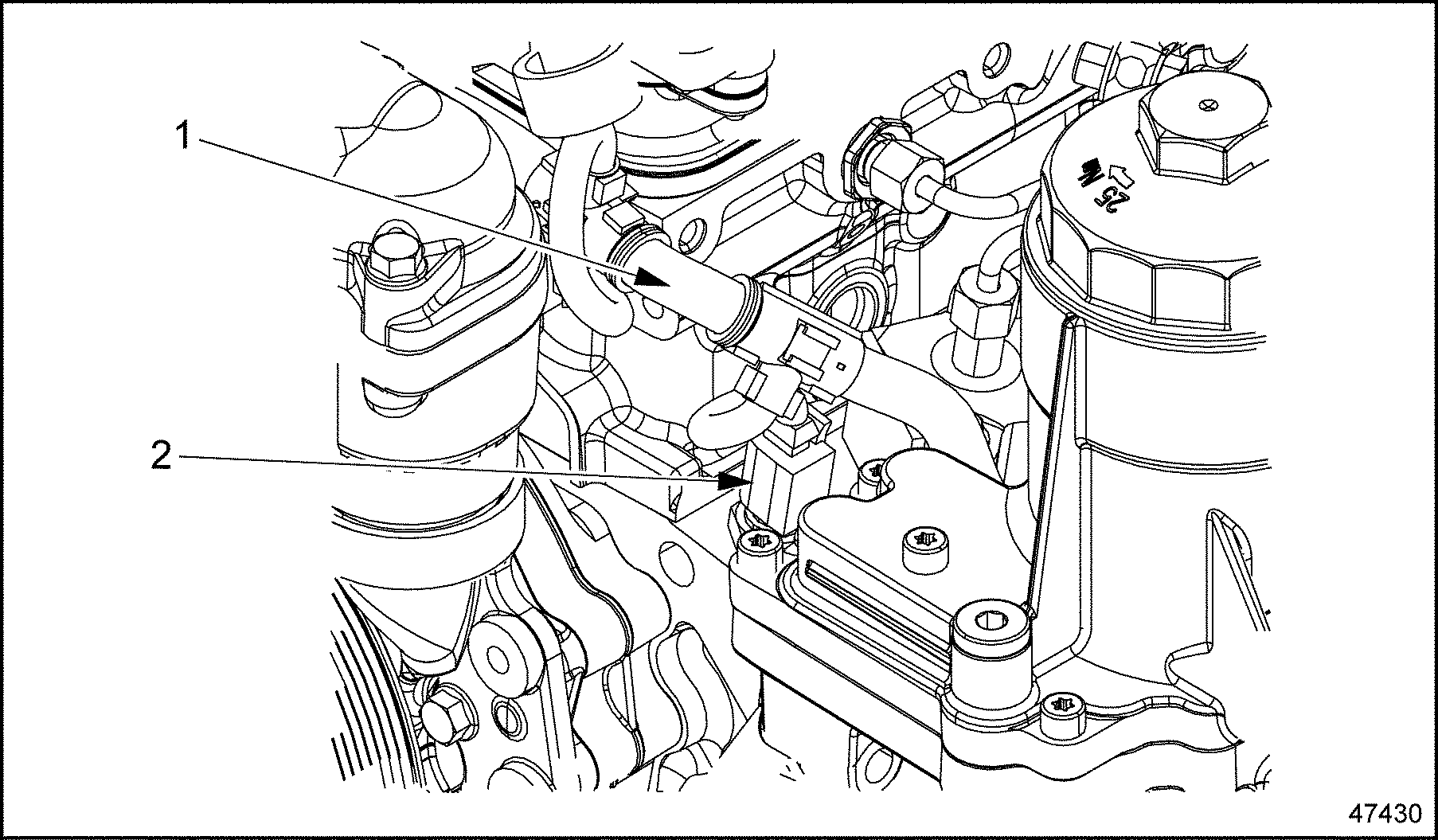
1. Engine Wiring Harness
2. Fuel Temperature Sensor
Figure 2. Disconnecting the Sensor
- Remove the fuel temperature sensor.
- Plug the disconnected fuel temperature sensor into the engine wiring harness and tie it up out of the way.
- Install the adaptor and seal from the fuel adaptor parts kit (J-46377-A)
. See Figure
"Connecting the Adaptor"
.
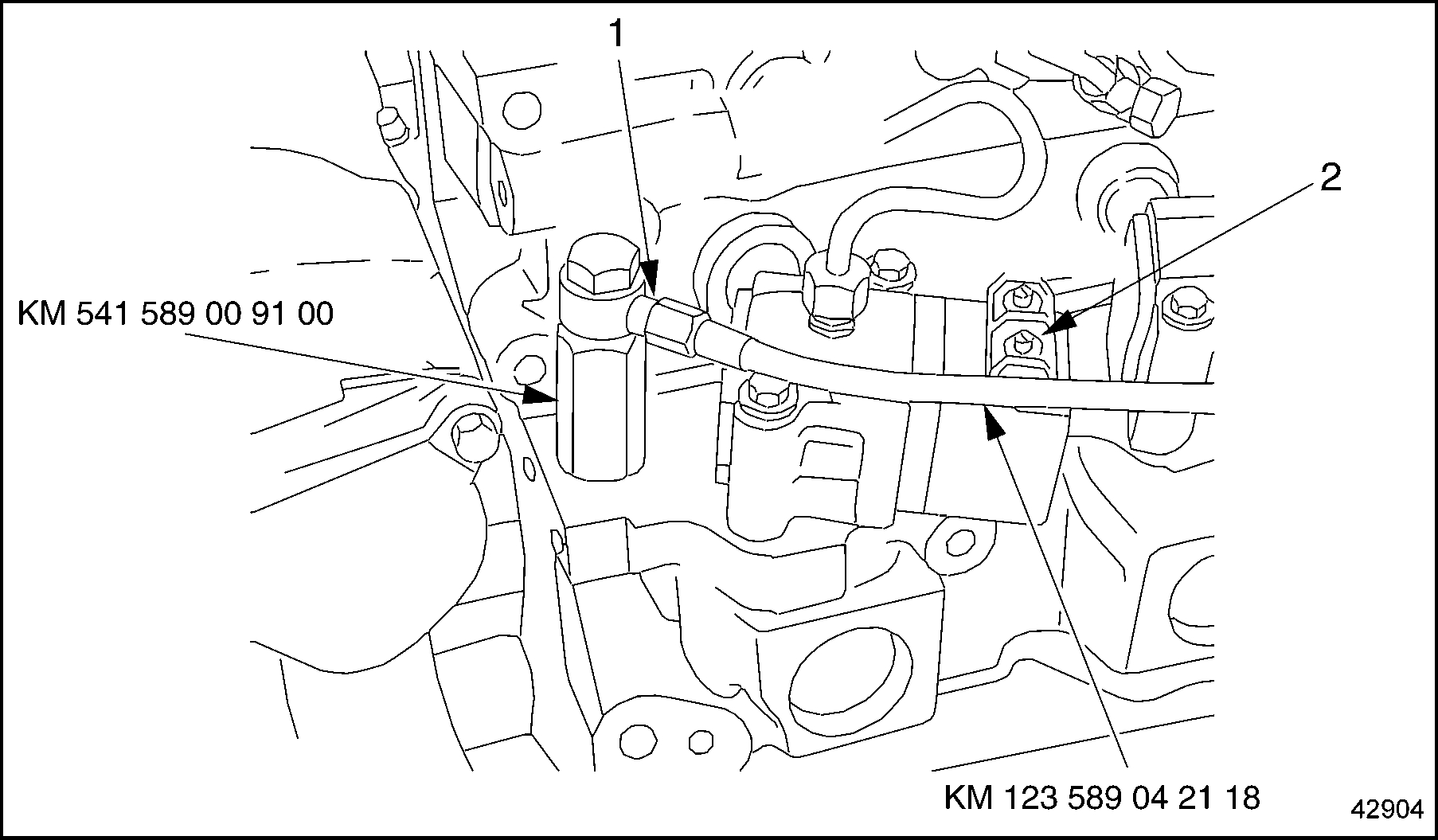
1. Test Hose from kit J-46377-A
3. Adaptor from kit J-46377-A
2. Electronic Unit Pump (EUP)
Figure 3. Connecting the Adaptor
- Attach a banjo fitting to the adaptor, and use that to connect the high-pressure fuel line (J-46372) and gauge (J-46378) .
- Disconnect the fuel return line at the main filter housing. Seal the opening with a cap.
- Disconnect the fuel feed line and feed line fitting at the main filter housing. In their place, attach the hose with a banjo fitting and the shut-off lever from the fuel adaptor parts kit (J-46377-A) .
Section 3.6.2
Test #5
- Open the fuel fill cap to release pressure in the fuel tank.
- Fill the low-pressure fuel circuit with compressed air until the fuel pressure on the high-pressure gauge reads 1,000 kPa (145 psi).
- Turn the shut-off lever to the OFF position and wait five minutes.
- At the end of five minutes, read the pressure on the gauge again. The gauge should read at least 975 kPa (141 psi).
If the gauge pressure is too low, see the causes listed in Table "Problem — The Low-Pressure Fuel System is Leaking" , “Problem — The Low Pressure Fuel System is Leaking,” and correct the problem. Make any necessary repairs and/or replacements.
- Check the engine oil for presence of fuel.
If there is fuel in the engine oil, see the causes listed in Table "Problem — The Low-Pressure Fuel System is Leaking" , “Problem — The Low Pressure Fuel System is Leaking,” and correct the problem. Make any necessary repairs and/or replacements.
- Open the shut-off valve and remove all the test equipment. Connect the fuel feed and return lines, as removed. Reconnect the fuel temperature sensor.
- Make sure the fuel fill cap is tightly closed and the vehicle has been restored to operating condition.
Problem — The Low-Pressure Fuel System is Leaking
Possible Cause
Remedy
The engine is leaking at external connections such as the fuel temperature sensor, the fittings at the base of the fuel filter housing, and/or the overflow valve.
Replace seals and/or gaskets as necessary. Tighten all high-pressure lines to 25 N·m (18 lb·ft) and all banjo bolts to 40 - 50 N·m (30 - 37 lb·ft).
The O-ring at one or more electronic unit pumps is leaking, worn, or missing.
Inspect the engine oil at the dipstick for the presence of fuel. Inspect the injector line fittings at the fuel pumps for leaks. Remove the electronic unit ump(s) and replace the O-rings, if necessary.
The O-ring at one or more fuel injectors are leaking, or the fuel injectors themselves are cracked or incorrectly installed.
Inspect the engine oil at the dipstick for the presence of fuel. Inspect all the fuel injectors, and especially their O-rings, for leaks. Remove the fuel injector(s) and replace the O-rings, if necessary. Replace the fuel injector(s) if cracked or otherwise broken, and install correctly.
The cylinder head is cracked or there is cavitation in the oil chamber.
Inspect the engine oil at the dipstick for the presence of fuel. Replace the cylinder head if necessary.
There are balls of sealant in the fuel feed line, or the return port is leaking at the cylinder block.
Replace the cylinder block seals.
Table 4. Problem — The Low-Pressure Fuel System is Leaking
| EPA07 MBE 900 DDEC VI Troubleshooting Guide - 6SE580 |
| Generated on 10-13-2008 |