Section 3.2
Test #1 Downstream Pressure Test
Perform the following test set-up and test to determine the downstream pressure.
Section 3.2.1
Test #1 Set-Up
For test #1 set-up, see Figure "Test Setup #1 Downstream Pressure Test" .
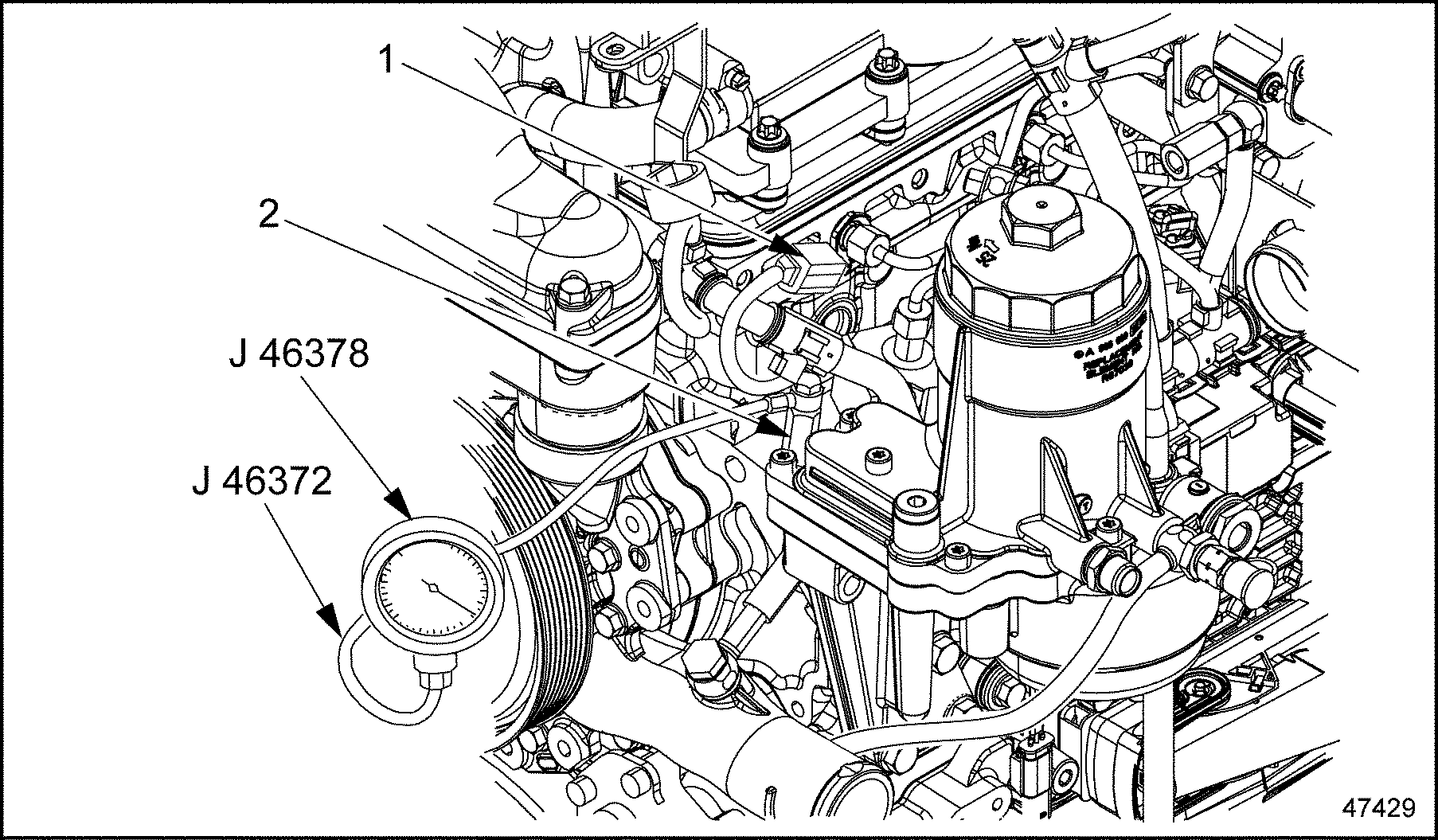
|
1. Fuel Temperature Sensor |
2. Adaptor from kit J-46372 |
Figure 1. Test Setup #1 Downstream Pressure Test
- In order to remove the fuel temperature sensor you must remove the engine lifting bracket for clearance.
- Remove the left front lifting bracket by removing three bolts securing the lifting bracket to the cylinder head.
- On engine applications with a hi-mount fan, remove the secondary mounting bracket by removing three bolts on the side of the cylinder head and two bolts at the hi-mount fan bracket
- Disconnect the engine wiring harness from the fuel temperature sensor. See Figure
"Disconnecting the Sensor"
.
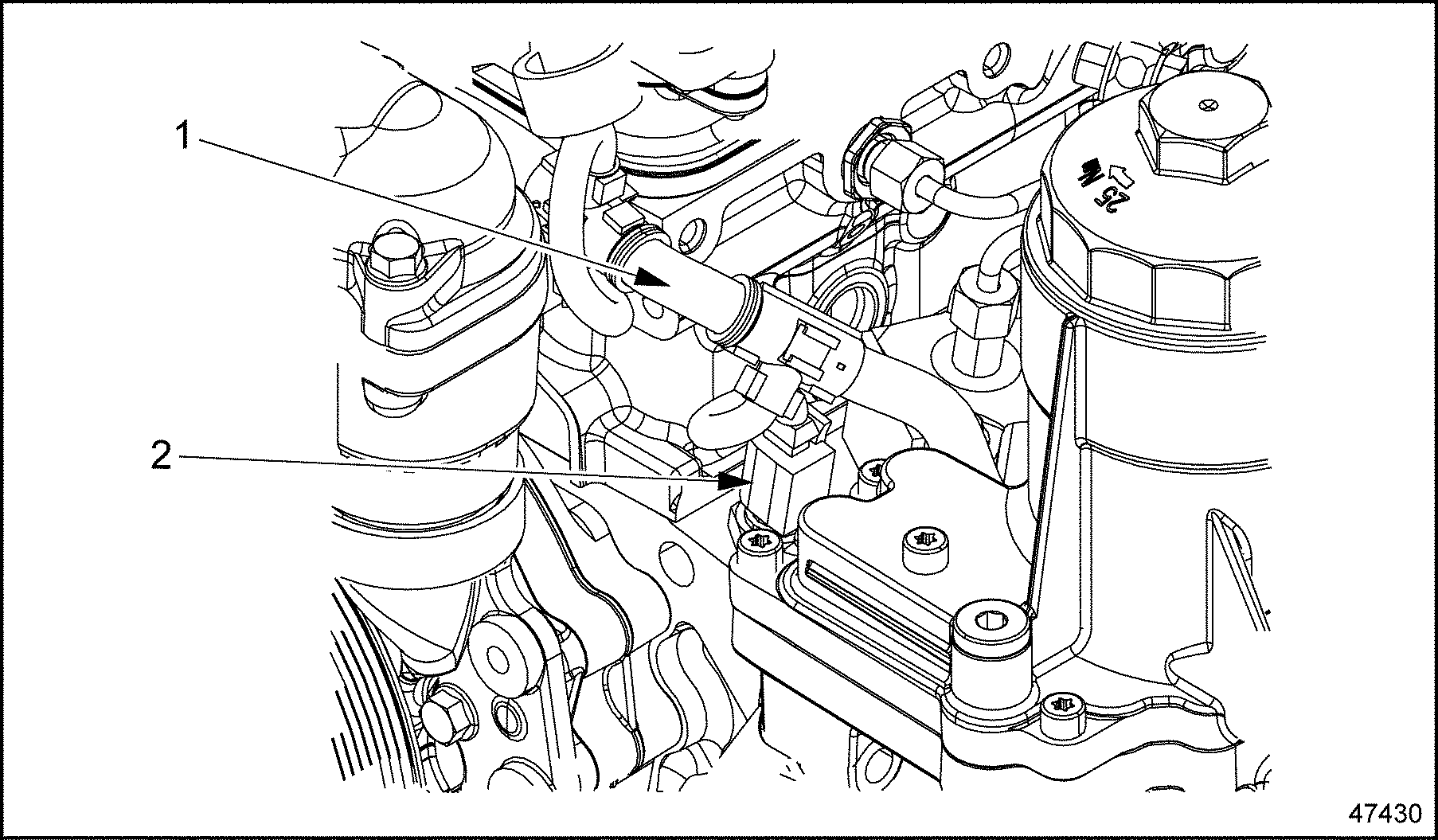
1.Engine Wiring Harness
2. Fuel Temperature Sensor
Figure 2. Disconnecting the Sensor
- Remove the fuel temperature sensor.
- Install the disconnected fuel temperature sensor into the engine wiring harness and tie it up out of the way.
- Install the adaptor and seal from the fuel adaptor parts kit (J-46377)
in the fuel temperature sensor location and tighten adaptor securely. See Figure
"Fuel Adaptor Parts Kit J-46377"
and Figure
"Connecting the Adaptor"
.
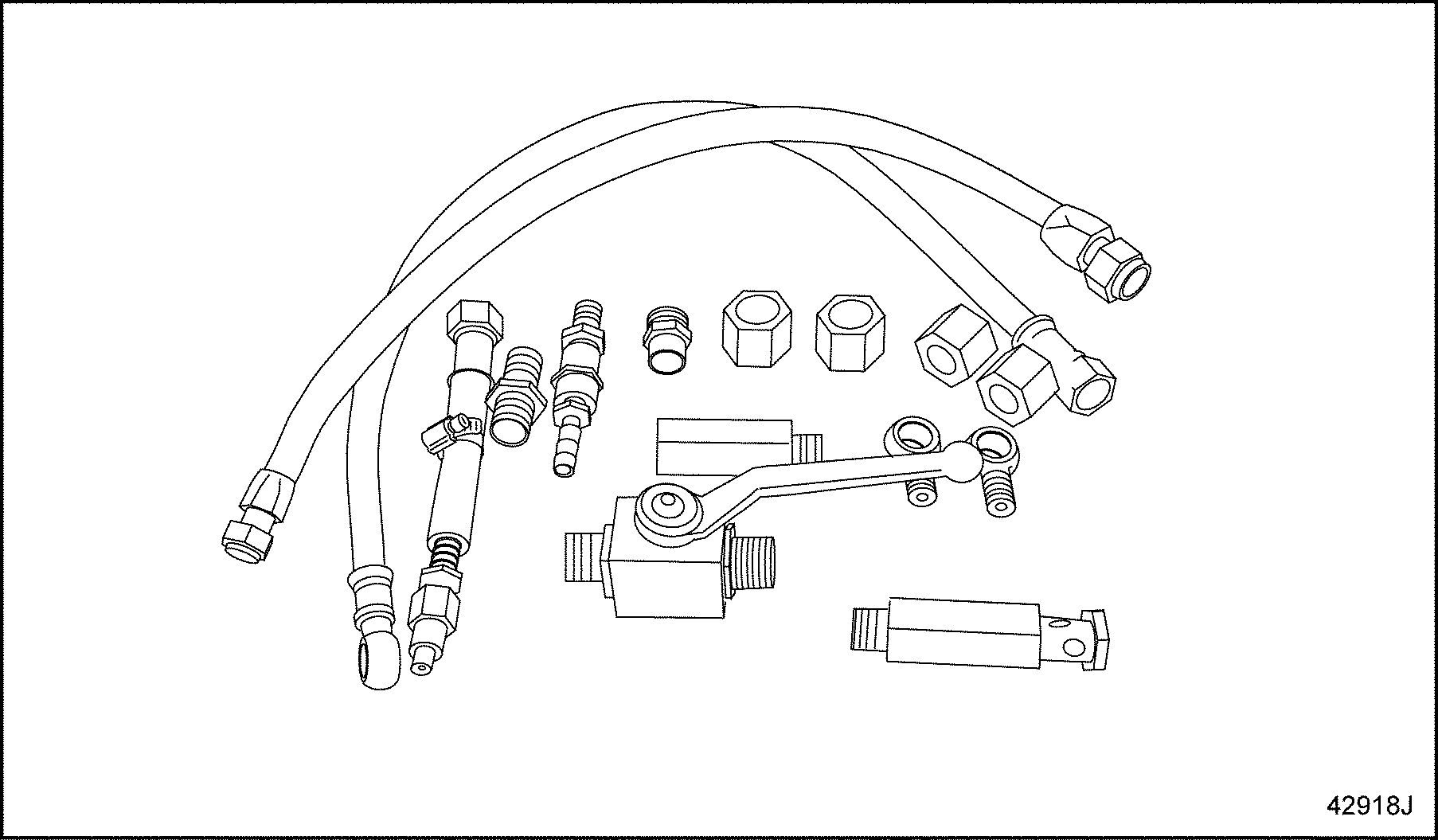
Figure 3. Fuel Adaptor Parts Kit J-46377
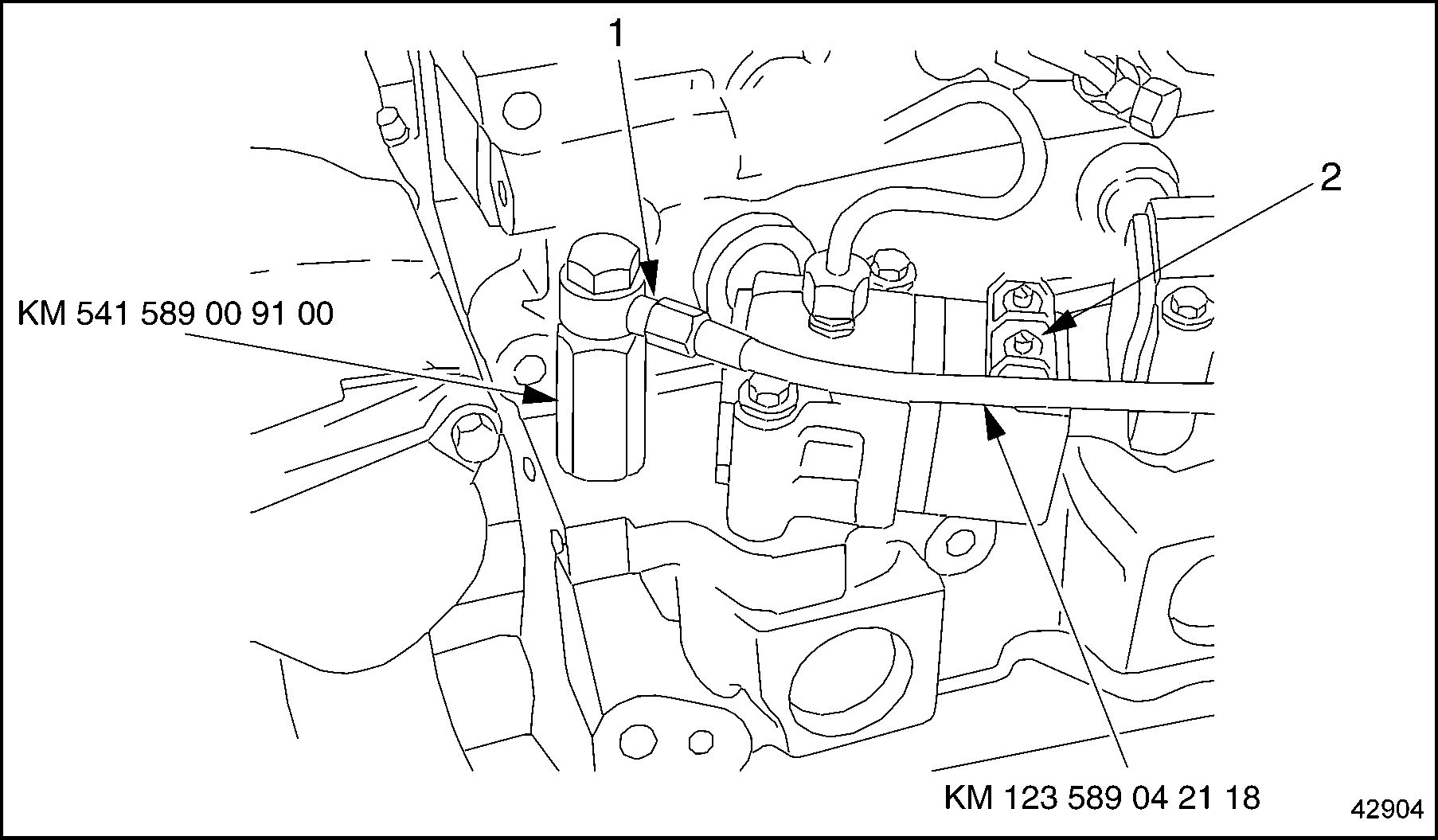
1. Banjo Fitting
2. Electronic Unit Pump
3. Adaptor from kit J-46377
Figure 4. Connecting the Adaptor
- Attach the banjo fitting and banjo bolt union from the fuel adaptor kit (J-46377) to the adaptor.
- Connect the high-pressure fuel line (J-46372) and gauge (J-46378) to the adaptor.
Section 3.2.2
Test #1
Perform the following:
- Install a new fuel filter cartridge into the fuel filter cap. Then install cap and filter into fuel filter housing. Torque the cap to 25 N·m (18 lb·ft).
- Open the fuel fill cap to release pressure in the fuel tank.

PERSONAL INJURY
To avoid injury before starting and running the engine, ensure the vehicle is parked on a level surface, parking brake is set, and the wheels are blocked.
- Start the engine and run it at a slow idle, 600 to 650 rpm.
- Record the fuel reading pressure on the high-pressure gauge. The gauge should read a minimum of 400 kPa (58 psi). If the fuel pressure is too low, perform test #3: Flow Test—At Fuel Filter, and correct the problem. Refer to "3.4 Test #3 Flow Test — At Fuel Filter" .
- Increase the engine speed to 2500 rpm.
- Read off the fuel pressure on the high-pressure gauge. The gauge should read from 400 to 650 kPa (58 to 94 psi).
- If the fuel pressure is within limits, perform test #2: Flow Test—At Fuel Injector, and correct the problem. Refer to "3.3 Test #2 Flow Test — At Fuel Injector" .
- If the fuel pressure is too low, perform test #3: Flow Test—At Fuel Filter, and correct the problem. Refer to "3.4 Test #3 Flow Test — At Fuel Filter" .
- If the fuel pressure is too high, see the causes listed in Table "Problem — Fuel Pressure is Too High Downstream of the Fuel Filter" , “Problem — The Fuel Pressure is Too High Downstream of the Fuel Filter,” and correct the problem. Make any necessary repairs and/or replacements.
- Remove all test equipment.
- Install the fuel temperature sensor and new washer. Torque the sensor to 30 N·m (22 lb·ft).
- After installing the fuel temperature sensor install the engine lifting bracket.
- Install the left front lifting bracket and secure the lifting bracket to the cylinder head with three bolts. Torque the bolts to 45–55 N·m (33–41 lb·ft).
- On engine applications with a hi-mount fan, remove the secondary mounting bracket by removing three bolts on the side of the cylinder head and two bolts at the hi-mount fan bracket. Torque the bolts to 45–55 N·m (33–41 lb·ft).
- Ensure the fuel fill cap is tightly closed and the vehicle has been restored to operating condition.
Problem — The Fuel Pressure is Too High Downstream of the Fuel Filter
Possible Cause
Remedy
The continuous ventilation port in the cap of the main fuel filter is blocked.
Inspect the continuous ventilation port for blockage. Clean the port and replace the cap if necessary.
The fuel drain lines downstream of the main filter housing are kinked or blocked.
Repair/Replace as necessary.
The check valve in the fuel feed line is blocked or not open wide (the flange at the fitting connection is bent.)
Repair/Replace as necessary.
The fuel return line and/or strainer at the fuel level sensor is blocked or kinked.
Remove the fuel level sensor and repair or replace the line or strainer, as necessary.
The overflow valve is faulty, or the incorrect valve has been installed. The valve jams when closed as a result of wear or impurities in the fuel
Inspect the overflow valve. Replace as necessary.
NOTE: Do not attempt to disassemble the overflow valve. The overflow valve cannot be repaired.
Table 5. Problem — Fuel Pressure is Too High Downstream of the Fuel Filter
| EPA07 MBE 900 DDEC VI Troubleshooting Guide - 6SE580 |
| Generated on 10-13-2008 |