Section 45.2
Troubleshooting Flash Code 42, SID 21/FMI 1
The following procedure will troubleshoot Flash Code 42.
Section 45.2.1
Resistance Check
Perform the following steps to check resistance.
- Turn vehicle ignition OFF.
- Disconnect Engine Harness connector at ECM/ECU.
- Measure resistance between sockets E-19 and E-20 on the Engine Harness connector. See Figure
"ECM/ECU Engine Harness Connector"
.
- If the resistance measurement is less than or equal to 135Ω, refer to "45.2.2 Check for Short" .
- If the resistance measurement is greater than 136Ω or open, refer to "45.2.3 Open Camshaft Position Sensor Line Check" .
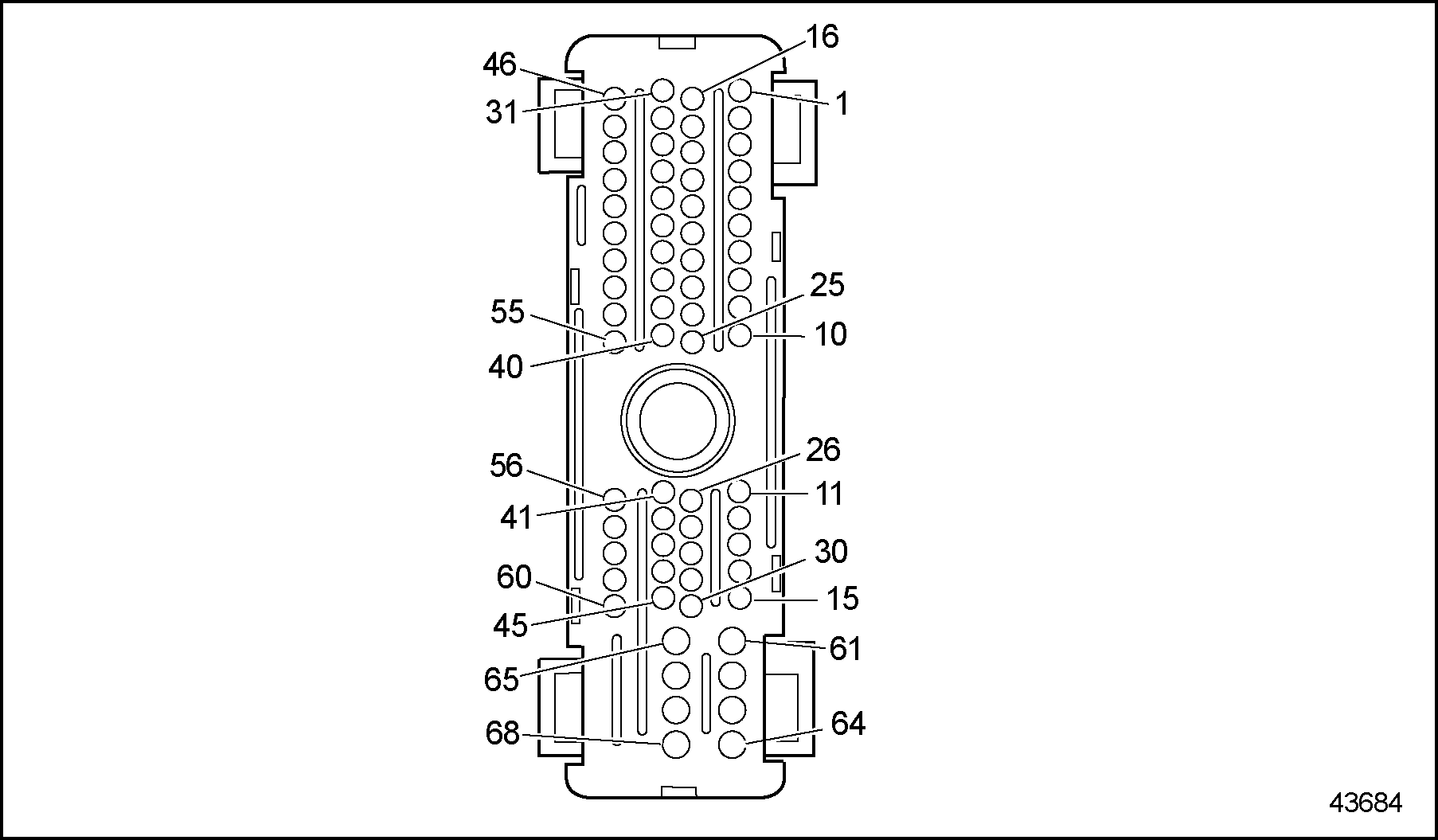
Figure 1. ECM/ECU Engine Harness Connector
Section 45.2.2
Check for Short
Perform the following steps to check for a short.
- Disconnect the SRS/CMP Connector.
- Measure resistance between sockets E-19 and E-20 on the Engine Harness connector. See Figure "ECM/ECU Engine Harness Connector" .
- Measure resistance between socket E-19 and ground, and between socket E-20 and ground.
- If the resistance measurement is less than or equal to 10,000 Ω, a short exists. Repair the short. Refer to "45.2.13.1 Verify Repairs" .
- If the resistance measurement is greater than 10,000 Ω, or open, refer to "45.2.4 Camshaft Position Sensor and Sensor ConnectorsTest" .
Section 45.2.3
Open Camshaft Position Sensor Line Check
Perform the following steps to check for an open SRS/CMP line.
- Disconnect the SRS/CMP connector.
- Install a jumper wire between sockets 1 and 2 of the SRS/CMP harness connector. See Figure "Engine Harness Connector to Camshaft Position Sensor" .
- Measure resistance between sockets E-19 and E-20 on the Engine Harness connector.
- If the resistance measurement is less than or equal to 5 Ω, refer to "45.2.4 Camshaft Position Sensor and Sensor ConnectorsTest" .
- If the resistance measurement is greater than 5 Ω or open, the signal line (E-20) or return line (E-19) is open. Repair the open. Refer to "45.2.13.1 Verify Repairs" .
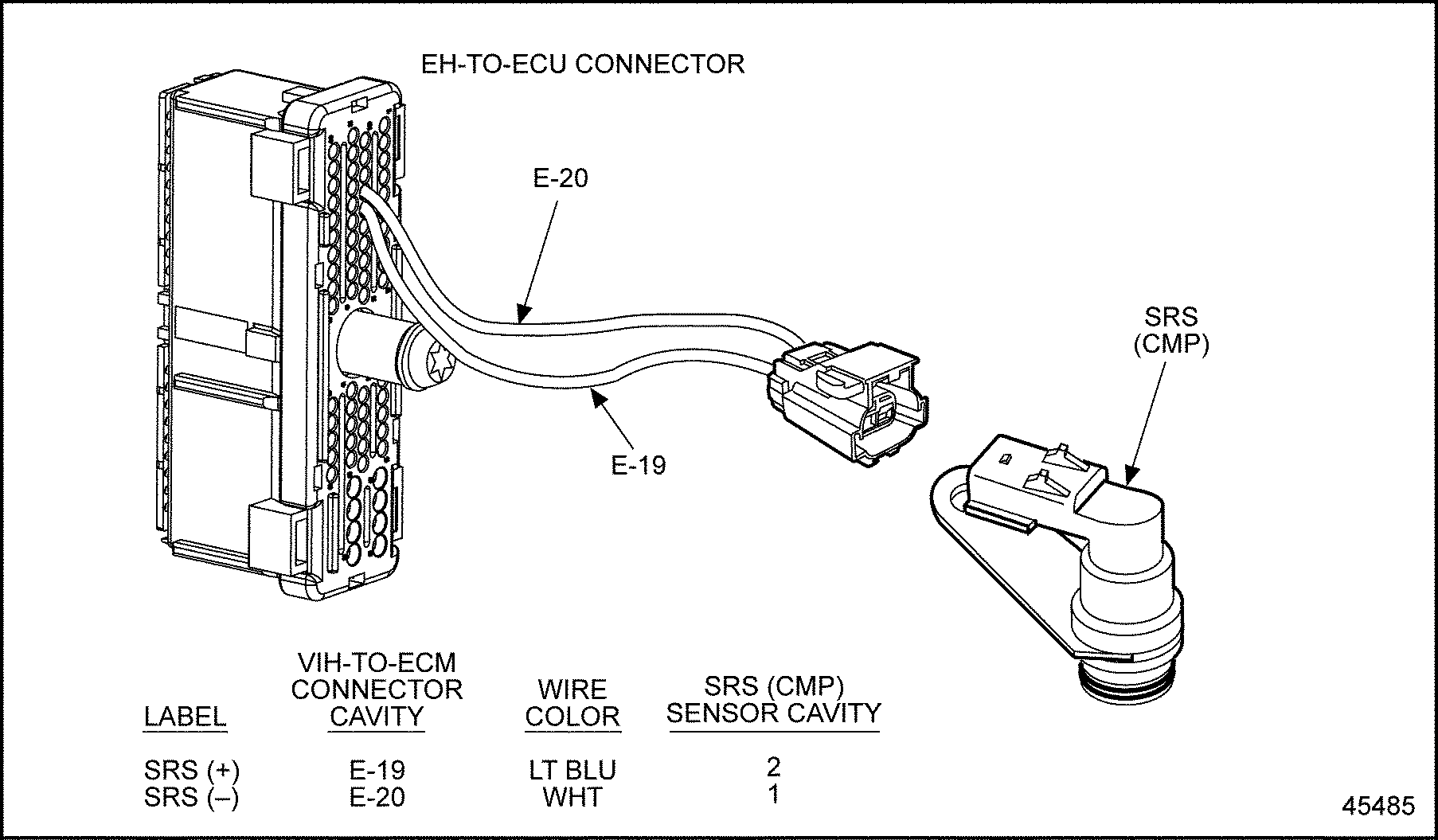
Figure 2. Engine Harness Connector to Camshaft Position Sensor
Section 45.2.4
Camshaft Position Sensor and Sensor ConnectorsTest
Perform the following steps to test the SRS/CMP.
- Measure resistance of SRS/CMP across the sensor connector pins 1 and 2.
- If the resistance measurement is less than or equal to 100 Ω or greater than 136 Ω, go to step 2 .
- If the resistance measurement is between 100 and 135 Ω, refer to "45.2.5 Check Camshaft Position Sensor Gap" .
- Check terminals at the SRS/CMP (both the SRS/CMP and harness side) for damage: bent, corroded, and unseated pins or sockets, or a bad contact. See Figure
"Engine Harness Connector to Camshaft Position Sensor"
- If terminals and connectors are damaged, repair them. Refer to "45.2.13.1 Verify Repairs" .
- If terminals and connectors are not damaged, replace the SRS/CMP. Refer to "45.2.12 Verify Crankshaft Position Sensor / Camshaft Position Sensor" .
Section 45.2.5
Check Camshaft Position Sensor Gap
Perform the following steps to check the SRS/CMP gap.
- Bar engine until SRS/CMP is over the SRS/CMP pin.
- Check the gap between SRS/CMP and the pin.
- If the gap setting is correct 0.508-1.016 mm (0.020 - 0.040 in.), refer to "45.2.6 Check for Crankshaft Position Sensor Code" . A depth micrometer can be used.
- If the gap setting is not correct, inspect for a loose or missing pin in the the bull gear and repair as necessary. Following repairs, refer to "45.2.13.1 Verify Repairs" .
Section 45.2.6
Check for Crankshaft Position Sensor Code
Perform the following steps to check for TRS/CKP code.
- If code 21/0 is not logged, go to step 2 . If code 21/0 is logged, refer to "45.2.7 Crankshaft Position Sensor Resistance Check" .
- Check terminals at the ECM/ECU Engine Harness connectors (both the ECM/ECU and harness side) for damage: bent, corroded, and unseated pins or sockets.
- If terminals and connectors are damaged, repair them. Refer to "45.2.13.1 Verify Repairs" .
- If terminals and connectors are not damaged, refer to "45.2.13 Verify Cranking Voltage" .
Section 45.2.7
Crankshaft Position Sensor Resistance Check
Perform the following steps to check TRS/CKP resistance.
- Remove the Engine Harness connector.
- Measure resistance between sockets E-17 and E-18 on the Engine Harness connector. See Figure
"Engine Harness Connector to Crankshaft Position Sensor"
.
- If the resistance measurement is greater than 136 Ω, refer to "45.2.9 Open Crankshaft Position Sensor Line Check" .
- If the resistance measurement is less than or equal to 135 Ω, refer to "45.2.8 Check for Short" .
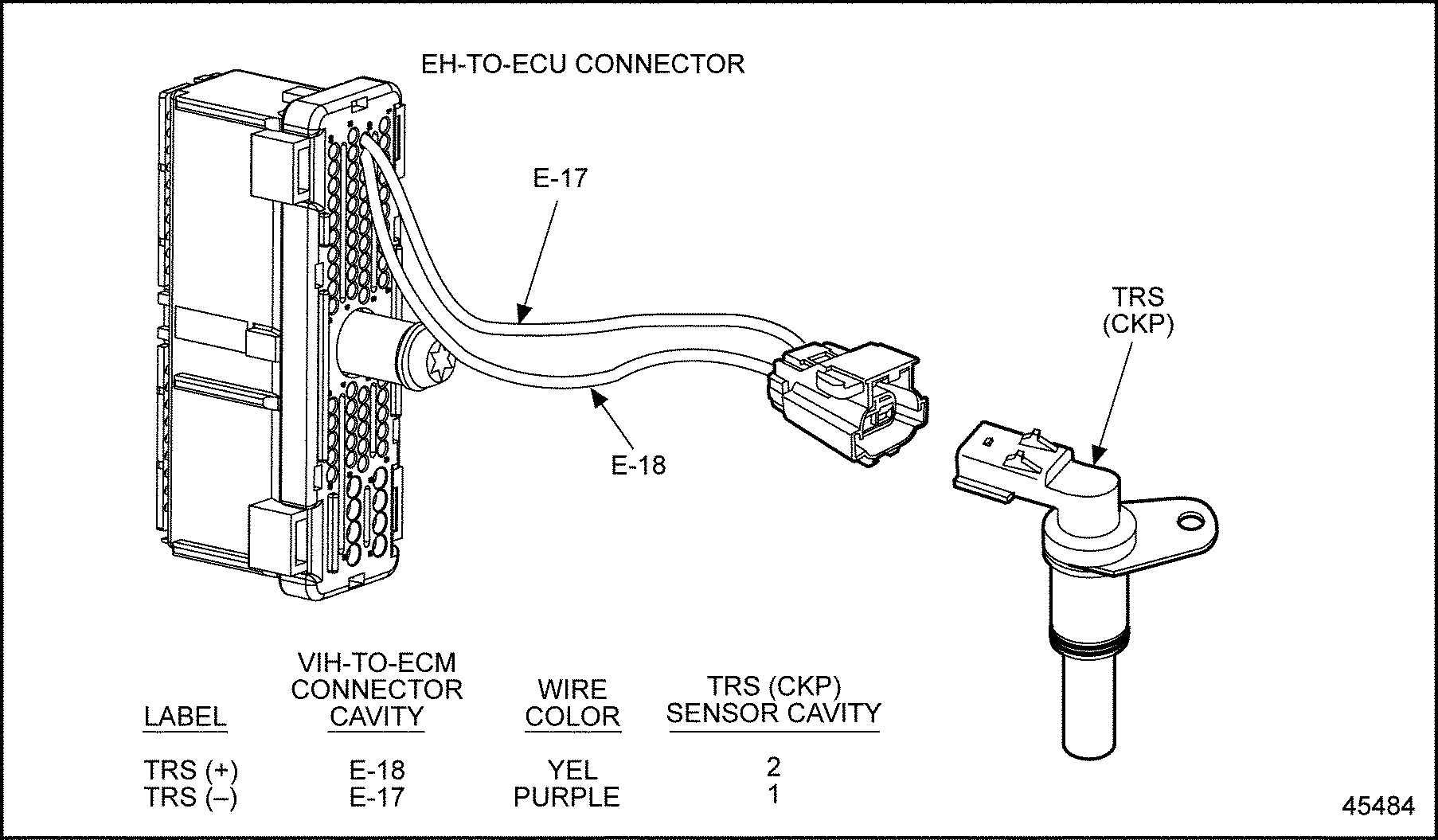
Figure 3. Engine Harness Connector to Crankshaft Position Sensor
Section 45.2.8
Check for Short
Perform the following steps to check for a short.
- Disconnect the TRS/CKP connector.
- Measure resistance between sockets E-17 and E-18 on the Engine Harness connector.
- If measured resistance is greater than 10,000 Ω, or open, refer to "45.2.10 Crankshaft Position Sensor and Sensor Connectors Test" .
- If measured resistance is less than or equal to 10,000 Ω, the signal line (E-18) is shorted to the return line (E-17). Repair the short. Refer to "45.2.13.1 Verify Repairs" .
Section 45.2.9
Open Crankshaft Position Sensor Line Check
Perform the following steps to check for an open TRS/CKP line.
- Disconnect the TRS/CKP connector.
- Install a jumper wire between sockets 1 and 2 of the TRS/CKP harness connector. See Figure "Engine Harness Connector to Crankshaft Position Sensor" .
- Measure resistance between sockets E-17 and E-18 on the Engine Harness connector.
- If the resistance measurement is less than or equal to 5 Ω, refer to "45.2.10 Crankshaft Position Sensor and Sensor Connectors Test" .
- If the resistance measurement is greater than 5 Ω, or open, the signal line (E-18) or return line (E-17) is open. Repair the open. Refer to "45.2.13.1 Verify Repairs" .
Section 45.2.10
Crankshaft Position Sensor and Sensor Connectors Test
Perform the following steps to test the TRS/CKP.
- Measure resistance of TRS/CKP across the sensor connector pins 1 and 2.
- If the resistance measurement is greater than 136 Ω or less than 100 Ω, go to step 2 .
- If the resistance measurement is between 100 and 135 Ω, refer to "45.2.6 Check for Crankshaft Position Sensor Code" and go to step 2 .
- Check terminals at the TRS/CKP (both the TRS/CKP and harness end) for damage: bent, corroded, and unseated pins or sockets or bad contacts. See Figure
"Engine Harness Connector to Crankshaft Position Sensor"
.
Figure 4. Engine Harness Connector to Crankshaft Position Sensor
- If terminals and connectors are damaged, repair them. Check for code s 21/1. If there are no codes, refer to "45.2.13.1 Verify Repairs" . If code s 21/1 appears, refer to "45.2.11 Check the Injector Drive Harness for Short" .
- If terminals and connectors are not damaged, replace the TRS/CKP. Check for code s 21/1. If there are no codes, refer to "45.2.12 Verify Crankshaft Position Sensor / Camshaft Position Sensor" . If code s 21/1 appears, refer to "45.2.11 Check the Injector Drive Harness for Short" .
Section 45.2.11
Check the Injector Drive Harness for Short
Check the injector drive harness for a short as follows:
- Disconnect the injector harness 10 pin connector and locate the terminals for each injector position. See Figure
"Injector Harness with Jake Brake"
.
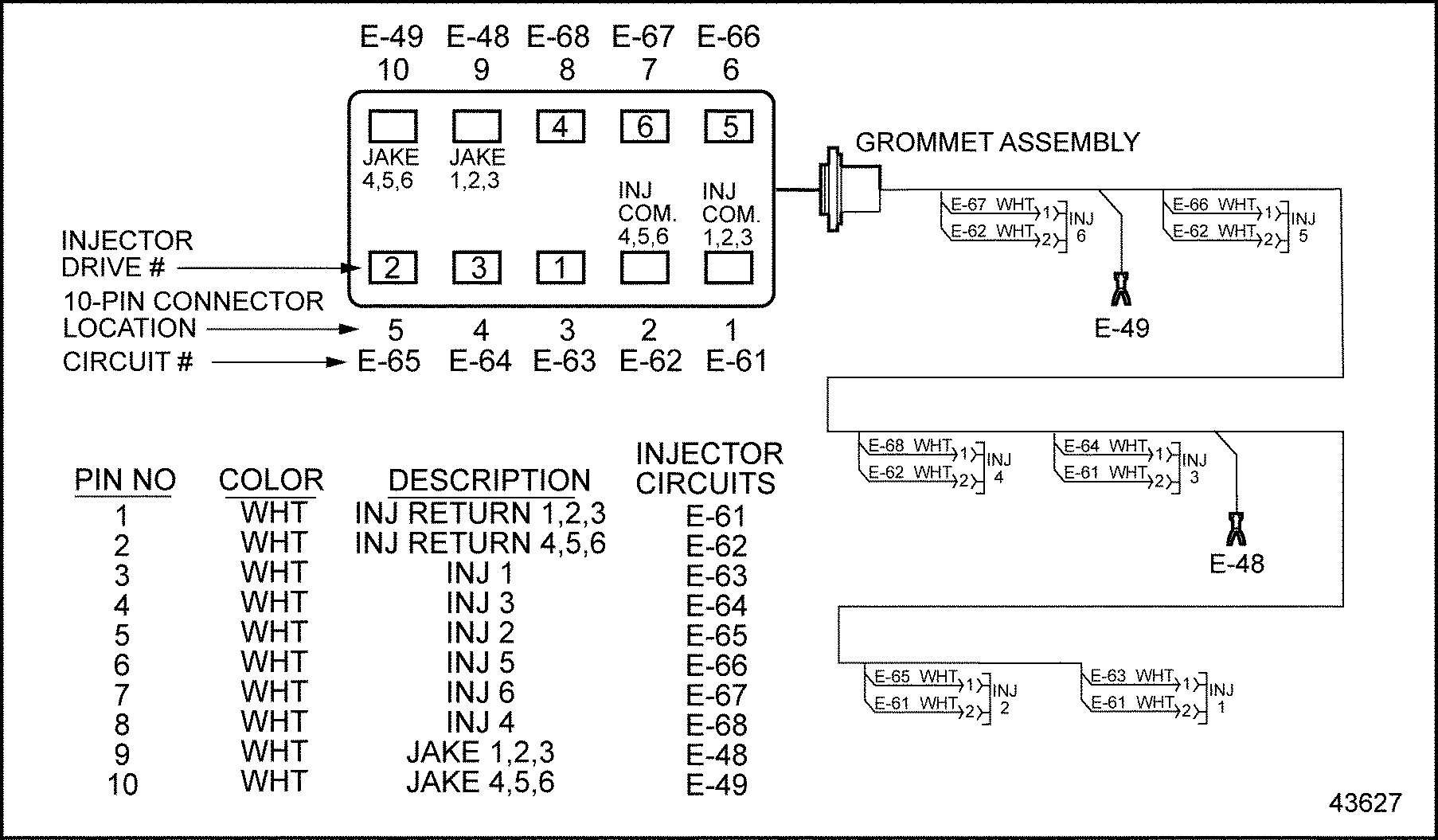
Figure 5. Injector Harness with Jake Brake
- Measure resistance between that terminal and the cylinder block.
- If the measured resistance is less than 5Ω, the wire is shorted to the block. Replace the harness between the 10 pin connector and the ECM/ECU. Refer to "45.2.12 Verify Crankshaft Position Sensor / Camshaft Position Sensor" .
- If the measured resistance is greater than 5Ω, call the Detroit Diesel Customer Support Center (313–592–5800).
Section 45.2.12
Verify Crankshaft Position Sensor / Camshaft Position Sensor
Perform the following steps to verify operation of the CKP/CMP.
- Turn the vehicle ignition OFF, reconnect all connectors and clear codes.
- Start and run the engine for one minute. Stop the engine.
- Check diagnostic tool for codes.
- If no codes are logged, troubleshooting is complete.
- If any codes except code s 21/1 are logged, refer to "18.3 First Step for Diagnosing a Fault Within the DDEC System" .
- If code s 21/1 and any other codes are logged, and the CMP was not replaced, refer to "45.2.6 Check for Crankshaft Position Sensor Code" .
- If code 21/1 and any other codes are logged, and the CMP was replaced, refer to "45.2.13 Verify Cranking Voltage" .
Section 45.2.13
Verify Cranking Voltage
Perform the following steps to verify cranking voltage.
- Turn vehicle ignition OFF, connect all connectors.
- Connect 12 volt from a fully charged battery power connector.
- Connect to ECM/ECU.
- Start the engine.
- If the engine starts, check the battery. If a voltage equalizer is installed, check the operation of the equalizer. If the equalizer is not working, refer to "45.2.13.1 Verify Repairs" .
- If the engine does not start, replace the ECM/ECU. Refer to "45.2.13.1 Verify Repairs" .
Section 45.2.13.1
Verify Repairs
Perform the following steps to verify repairs.
- Turn vehicle ignition OFF, reconnect all connectors.
- Turn vehicle ignition ON and clear codes.
- Start and run the engine for one minute. Stop the engine.
- Check the diagnostic tool for codes.
- If no codes are logged, troubleshooting is complete.
- If code s 21/1 is logged, check the injector harness for a short to ground (can cause extra pulses). Refer to Chapter "60 Flash Code 61 - Injector Response Long" , section "60.2.3 Check for Short" , “Check for Short.”
- If code s 21/1 and any other codes are logged, review this section to find the error or call the Customer Support Center (313–592–5800).
- If any codes except code s 21/1 are logged, refer to "18.3 First Step for Diagnosing a Fault Within the DDEC System" .
| Series 60 DDEC V Troubleshooting Guide - 6SE570 |
| Generated on 10-13-2008 |