Section 22.2
Troubleshooting Flash Code 12, PID 187/FMI 3
This diagnostic condition is typically:
- Open sensor return circuit
- Sensor signal circuit is shorted to the sensor +5 volt supply
- Throttle sensor not adjusted properly at full throttle
The following procedure will troubleshoot Flash Code 12.
Section 22.2.1
Multiple Code Check
Perform the following steps to check for multiple codes:
- Turn ignition ON.
- Plug in your diagnostic tool.
- If active code p 187/3 and any other codes except 91/3 or 100/3 are logged, refer to "22.2.2 Sensor Check" .
- If active code p 187/3 and codes p 91/3 or p 100/3 are logged, refer to "80.1 Troubleshooting the Vehicle Interface Harness +5 Volt Supply" .
Section 22.2.2
Sensor Check
Perform the following steps to check the sensor:
- Turn ignition OFF.
- Unplug the VSG throttle connector. (For VSG circuit, see Figure .)
- Turn ignition ON.
- Read active codes.
- If active code p 187/4 is logged, and code p 187/3 only occurs when the throttle is moved at or near full throttle (when connected), refer to "22.2.3 Check Calibration" .
- If active code p 187/3 is logged, and the code appears when the throttle is not at or near full throttle (when connected), refer to "22.2.4 Return Circuit Check" .
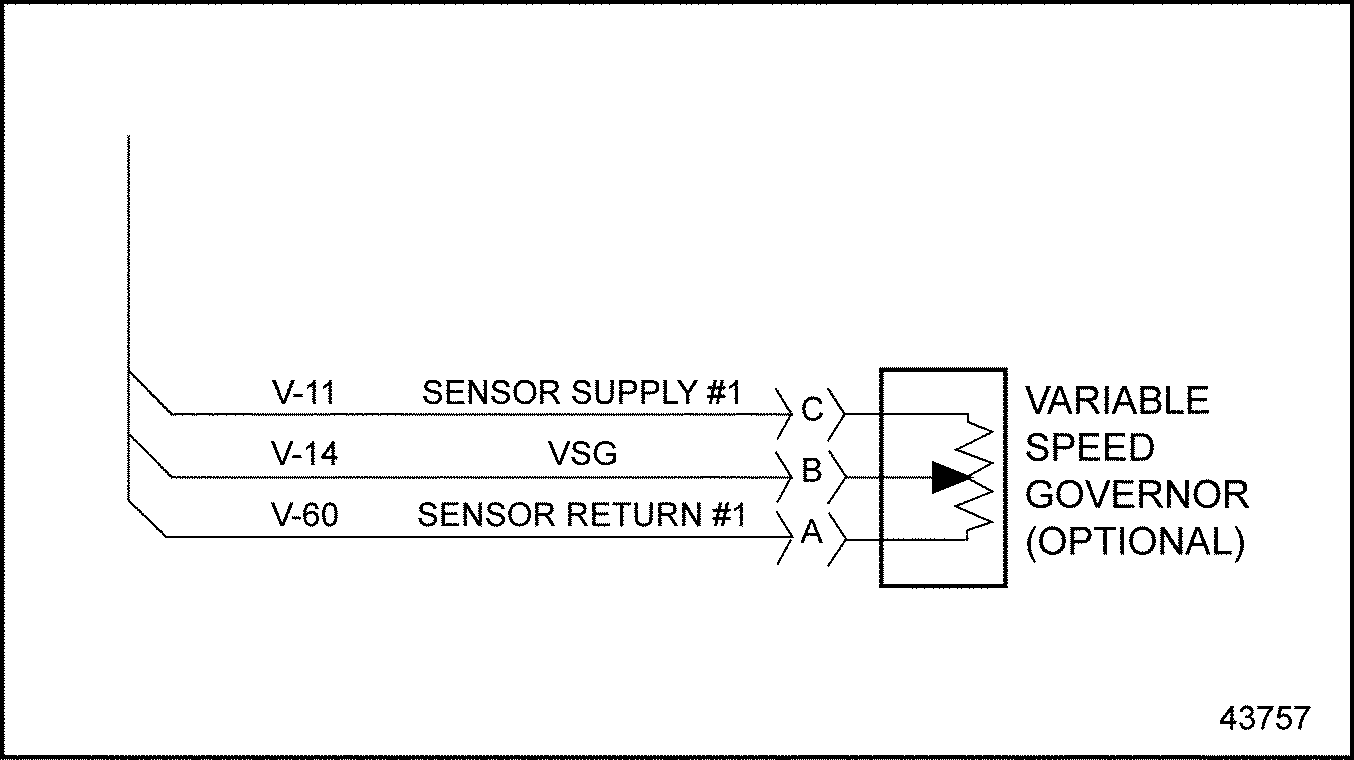
Figure 1. Variable Speed Governor Circuit
Section 22.2.3
Check Calibration
Perform these additional steps to check the calibration of the sensor:
- Plug in the VSG throttle connector.
- Turn ignition ON.
- Plug in the diagnostic tool.
- Display VSG counts.
- Dial throttle to Full Throttle.
- If the VSG counts are greater than 968, adjust the maximum throttle travel. If not adjustable, replace the throttle control.
- If the VSG counts are less than 968, refer to "22.2.4 Return Circuit Check" .
Section 22.2.4
Return Circuit Check
Perform these steps to check the return circuit:
- Place the transmission in neutral.
- Turn ignition OFF.
- Install a jumper wire between pin A (V-60) and pin B (V-14) of the VSG throttle harness connector.
- Disconnect the vehicle harness connector at the ECM/ECU.
- Enable VSG control. (This may require the ignition be turned on.)
- Measure resistance between sockets V-60 and V-14 on the vehicle harness connector. See Figure
"ECM/ECU Vehicle Interface Harness Connector"
.
- If the resistance is less than or equal to 5 Ω, go to step 7 .
- If the resistance is greater than 5 Ω , the return line V-60 is open, repair the open. Refer to "22.2.6.1 Verify Repairs" .
- Inspect terminals at the VSG connectors (sensor side and harness side) for bent, corroded and unseated pins or sockets. See Figure
"ECM/ECU Vehicle Interface Harness Connector"
.
- If the VSG connector terminals are damaged, repair terminals and/or connectors. Refer to "22.2.6.1 Verify Repairs" .
- If the VSG connector terminals are in good condition with no signs of damage, refer to "22.2.5 Check for Short to Battery (+)" .
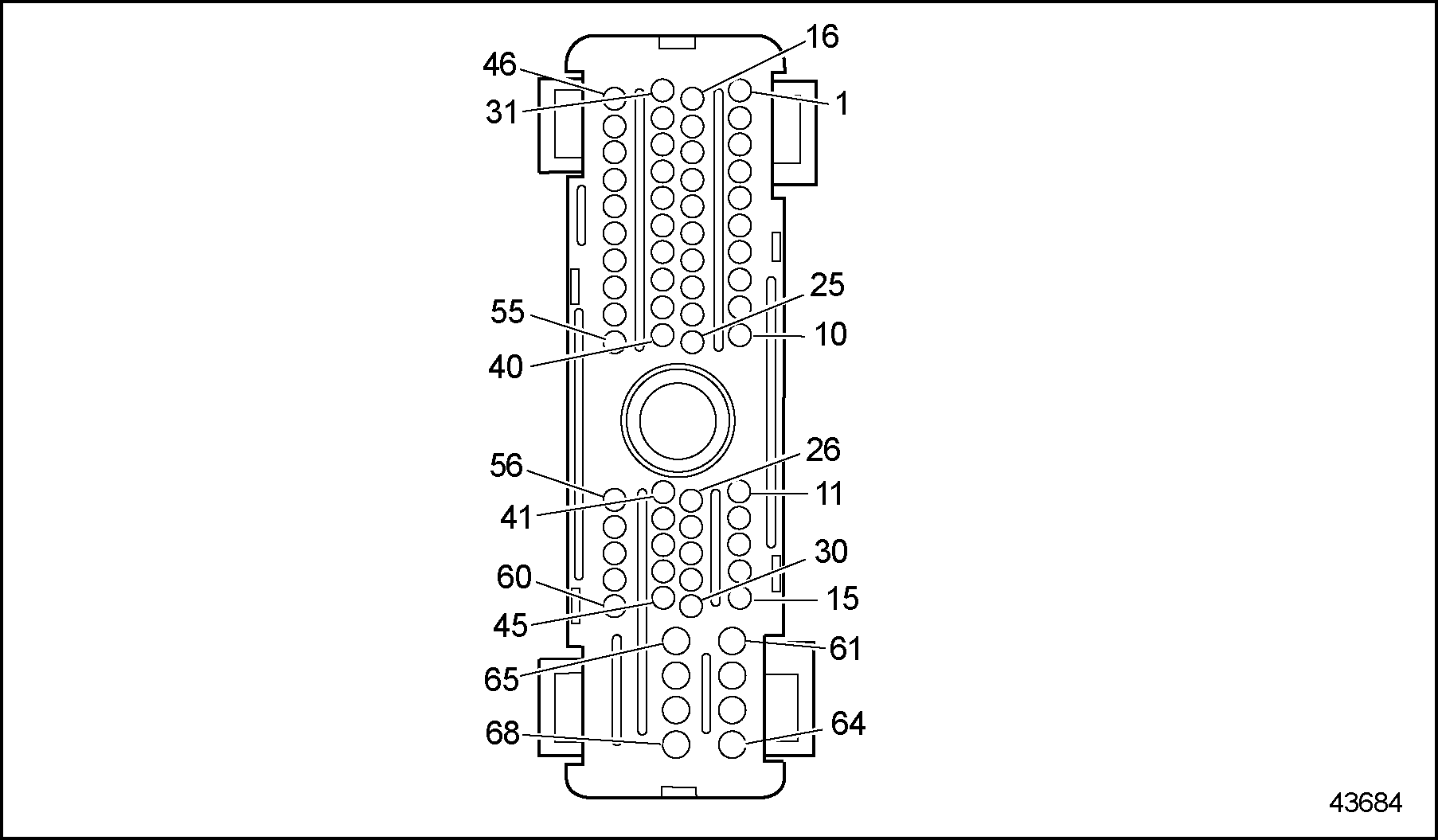
Figure 2. ECM/ECU Vehicle Interface Harness Connector
Section 22.2.5
Check for Short to Battery (+)
Perform these steps to check for short to battery (+).
- Turn ignition OFF. Unplug VSG connector.
- Turn ignition ON. Measure voltage between V-14 and battery ground. See Figure
"ECM/ECU Vehicle Interface Harness Connector"
.
- If measured voltage is less than or equal to 0.2 volts, refer to "22.2.6 Check for Short" .
- If measured voltage is greater than 0.2 volts, signal wire is shorted to 12/24 volt source. Repair or replace V-14 circuit. Refer to "22.2.6.1 Verify Repairs" .
Section 22.2.6
Check for Short
To check for short, perform the following:
- Turn ignition OFF. Unplug vehicle 68-pin connector and the VSG connector.
- Turn ignition ON. Enable VSG. Refer to OEM guidelines.
- Measure resistance between V-11 and V-14. See Figure
"Variable Speed Governor Circuit"
.
- If resistance is greater than 5 Ω, check ECM/ECU connector. Refer to "22.2.6.1 Verify Repairs" .
- If resistance is less than 5 Ω, wire V-11 (5-volt supply) is shorted to V-11 (signal). Repair short or replace wire. Refer to "22.2.6.1 Verify Repairs" to verify repairs.
Figure 3. Variable Speed Governor Circuit
Section 22.2.6.1
Verify Repairs
Perform the following steps to verify repairs.
- Turn ignition OFF and reconnect all connectors.
- Set parking brake, transmission in Neutral.
- Turn ignition ON and clear the codes.
- Start and run the engine for one minute then stop the engine.
- Check the diagnostic tool for codes.
- If no codes are displayed, no further troubleshooting is required.
- If code p 187/3 is not logged, and other codes are logged, refer to "18.3 First Step for Diagnosing a Fault Within the DDEC System" .
- If code p 187/3 is logged, and other codes are logged, review this section again.Refer to "22.2.1 Multiple Code Check" . If the code is still logged, call the DDC Customer Support Center (313–592–5800).
| Series 60 DDEC V Troubleshooting Guide - 6SE570 |
| Generated on 10-13-2008 |