Section 13.9
Combustion Gases in Coolant
To determine if combustion gases in coolant is causing high engine coolant temperature, perform the cylinder compression test.Refer to "13.9.1 Cylinder Compression Test" .
Section 13.9.1
Cylinder Compression Test
Perform the following steps for a compression test on a Series 60 Engine:
 PERSONAL INJURY |
|
Diesel engine exhaust and some of its constituents are known to the State of California to cause cancer, birth defects, and other reproductive harm.
|
- Start and run the engine until normal operating temperature is reached. Stop the engine.
- Clean and remove the rocker cover. If cover is a two-piece design, it is not necessary to remove the bottom.
- Disconnect the filter to head fuel supply line at the outlet fitting on the secondary fuel filter adaptor. Place a suitable container under the line to catch the spilled fuel.
EYE INJURY
To avoid injury from flying debris when using compressed air, wear adequate eye protection (face shield or safety goggles) and do not exceed 276 kPa (40 psi) air pressure.
NOTICE:
All the fuel must be removed from the cylinder head before removing injectors. This prevents the fuel from entering the cylinder and causing cylinder wall lube oil wash down or a hydrostatic lock at startup.
- Blow low pressure regulated air no more than 207 kPa (30 psi ) into the inlet fitting for 20 to 30 seconds or until all the fuel is purged from the head.
- Remove the three rocker shaft mounting bolts and nut from the front rocker shaft assembly. Using rocker arm lifter J–35996–A
, see Figure
"Rocker Arm/Shaft Assembly Removal/Installation"
, lift the assembly straight up and off of the head and place in a clean area on the bench.
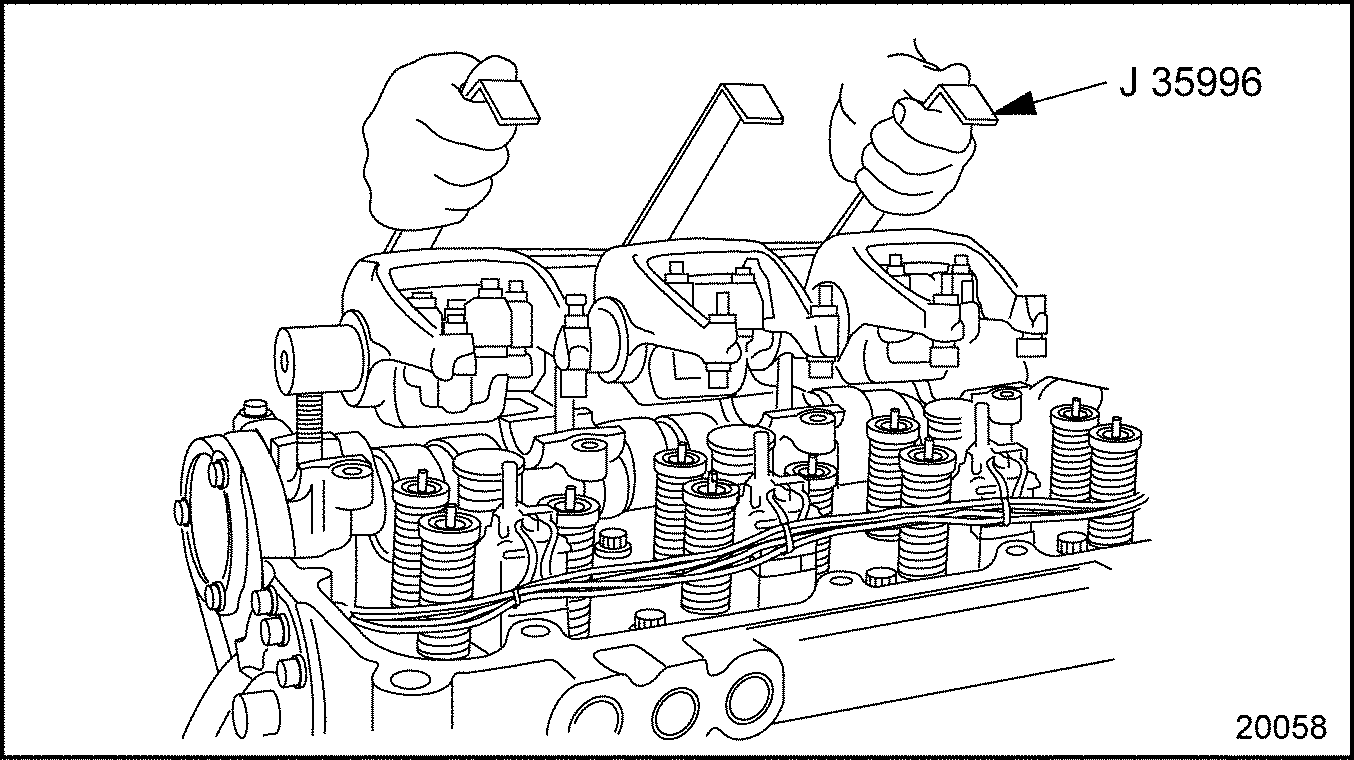
Figure 1. Rocker Arm/Shaft Assembly Removal/Installation
- Disengage the locking tang on the harness plug connection, grasp the connector and gently pull it from the socket.
- Remove the injector hold down clamps.
NOTICE:
Use extreme care when handling injectors to avoid costly damage by dropping or mishandling. Always install new O-rings when replacing injectors.
- Remove the front three injectors from the cylinder head.
- Place three compression test adaptors (J–38768–A) into the injector holes.
- Install the injector hold down clamps and torque hold down bolts to 58-66 N·m (43-49 lb·ft).
- Carefully remove the shaft from the rocker arm assembly by slowly pulling it out of the assembly. Place the shaft on the bench. Do not disturb the stack-up of the rocker arm sets.
- Remove the three injector rocker arms and replace with spacers (J–38768–5) .
- Lubricate the shaft with clean engine oil. With sleeves in place, carefully reinstall the shaft through each rocker arm shaft. Make sure cup plug end faces inboard.
- Install the modified rocker arm shaft assembly on the head. If the engine is equipped with a Jake Brake®, use non-Jake Brake rocker arm shaft bolts 8929129. Torque the three bolts and the nut to 102-108 N·m (75-80 lb·ft).
- Reconnect and prime the fuel system.
- Disconnect the gray connector (injector drive) from the Electronic Control Unit (ECU) for the “A” bank injectors.
Note: To avoid excessive oil splash during the test, place the bottom half of a two piece design rocker cover (with head to cover gasket installed) on the cylinder head. Install bolts and tighten.
PERSONAL INJURY
To avoid injury when working on or near an operating engine, wear protective clothing, eye protection, and hearing protection.
PERSONAL INJURY
To avoid injury from hot surfaces, wear protective gloves, or allow engine to cool before removing any component.
PERSONAL INJURY
Diesel engine exhaust and some of its constituents are known to the State of California to cause cancer, birth defects, and other reproductive harm.
- Always start and operate an engine in a well ventilated area.
- If operating an engine in an enclosed area, vent the exhaust to the outside.
- Do not modify or tamper with the exhaust system or emission control system.
- Start and run the engine until the coolant out temperature reaches 40.5 C (105 F).
- Attach cylinder compression gauge (J–6692–B)
to the first adaptor. See Figure
"Attach Cylinder Compression Gauge J 6692–B"
.
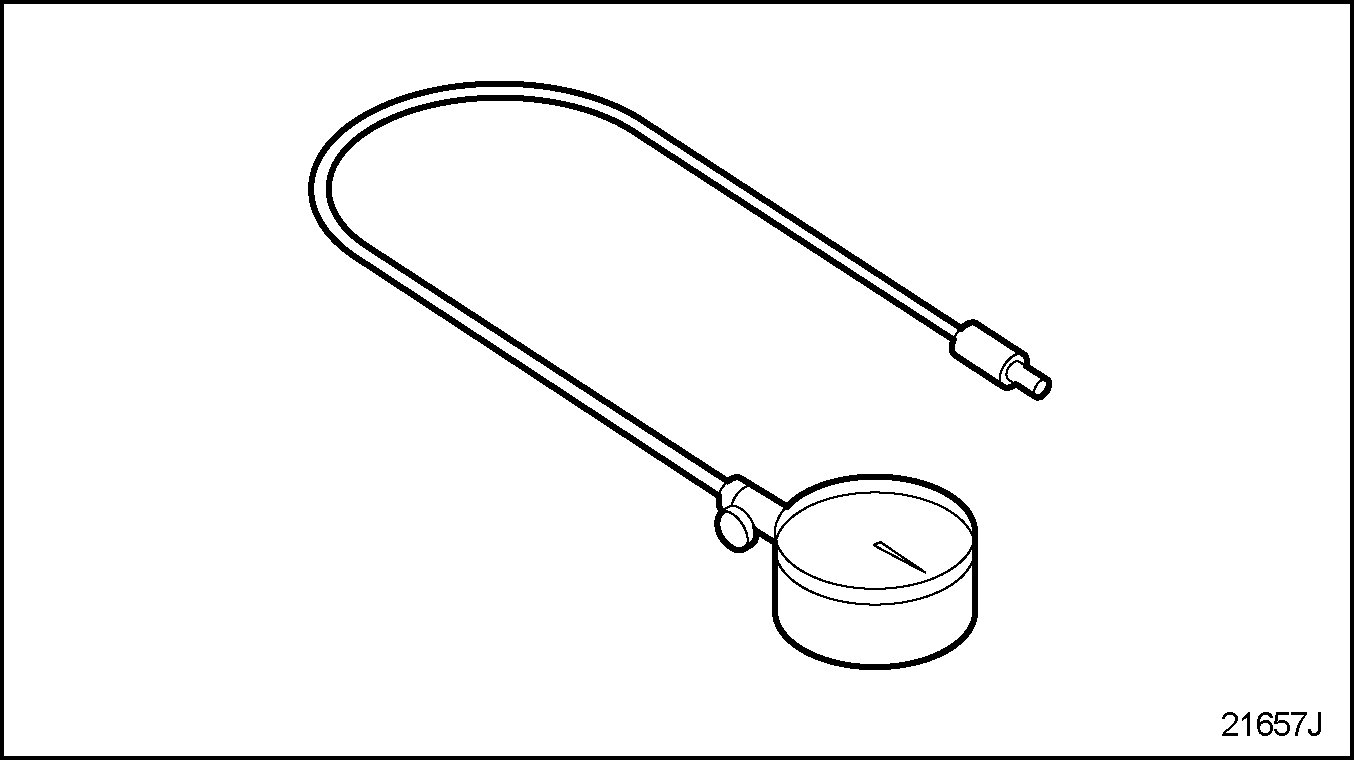
Figure 2. Attach Cylinder Compression Gauge J 6692–B
- Push the pressure relief valve on the gauge several times until the highest compression reading is reached. This should be 3102-3793 kPa (450-550 psi) with no two cylinders differing by more than 276 kPa (40 psi). If compression readings are below specifications, repeat step 6 several times to be certain of the reading.
- After testing the three cylinders, disconnect the filter to head fuel supply line at the outlet fitting on the secondary fuel filter adaptor. Place a suitable container under the line to catch the spilled fuel.
EYE INJURY
To avoid injury from flying debris when using compressed air, wear adequate eye protection (face shield or safety goggles) and do not exceed 276 kPa (40 psi) air pressure.
NOTICE:
All the fuel must be removed from the cylinder head before removing the compression test adaptors. This prevents the fuel from entering the cylinder and causing cylinder wall lube oil wash down or a hydrostatic lock at startup.
- Blow low pressure regulated air (no more than 207 kPa (30 psi) into the inlet fitting for 20 to 30 seconds or until all the fuel is purged from the head.
- Remove bolts from the modified rocker arm shaft assembly and, using rocker arm lifter (J–35996) , lift the assembly straight up and off the cylinder head. Place in a clean area on the bench.
- Carefully remove the shaft from the rocker arm assembly, remove the three oil control sleeves, and replace the three injector rocker arms. Lubricate the shaft with clean engine oil and carefully reinstall through each rocker arm.
- Remove the injector hold down clamps and remove the three compression test adaptors from the cylinder head. Using new seal rings, reinstall the injectors and clamps and torque bolts to specifications. For injector torque specifications, refer to appropriate service manual, engine chapter.
- Install harness plug into injector connector making sure the locking tang clicks into place.
- Replace the completed rocker arm shaft assembly on the engine and torque nut and bolts to specifications
- Perform steps 2 through for the three rear cylinders.
- Check test results.
- If test results are to specifications; check radiator coolant flow, refer to "13.10 Abnormal Radiator Coolant Flow" .
- If test results are not to specifications; refer to "13.9.2 Cylinder Head Gasket Replacement" .
Section 13.9.2
Cylinder Head Gasket Replacement
Perform the following steps to replace cylinder head gasket:
- Remove and replace cylinder head gasket; refer to appropriate service manual, engine chapter.
- Verify new cylinder head gasket replacement; refer to "13.9.2.1 Test Engine with Replaced Cylinder Head Gasket" .
Section 13.9.2.1
Test Engine with Replaced Cylinder Head Gasket
Perform the following to determine if thermo-modulated fan replacement resolved high engine coolant temperature:
- Start and run the engine.
- Run the engine through its operating range with no-load for approximately 5 minutes, allowing the engine coolant to reach normal operating range.
- If the engine coolant temperature is 88-96°C (190-210°F), no further troubleshooting is required. Shut down the engine.
- If the engine coolant temperature is not 88-96°C (190-210°F), shut down the engine. Check radiator coolant flow; refer to "13.10 Abnormal Radiator Coolant Flow" .
| Series 60 DDEC V Troubleshooting Guide - 6SE570 |
| Generated on 10-13-2008 |