Section 5.3
Defective Starter
To determine if a defective starter is causing no start, perform the following steps:
- Place the red lead of a voltmeter to the solenoid "BAT'' or terminal; see Figure
"Cranking Motor Available Voltage Test"
.
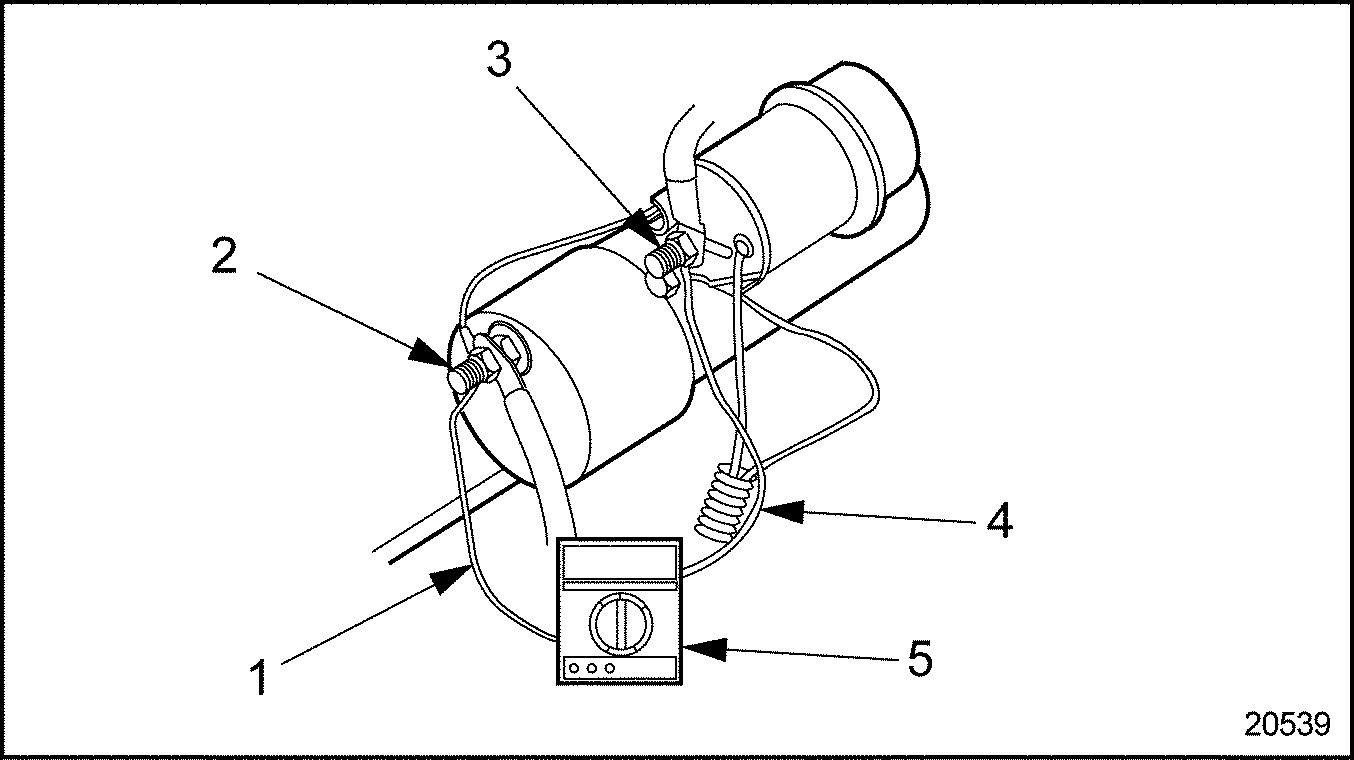
1. Red Lead
4. Black Lead
2. Starter Ground
5. Voltmeter
3. Solenoid Terminal
Figure 1. Cranking Motor Available Voltage Test
- Place the black voltmeter lead to the starter ground terminal; see Figure "Cranking Motor Available Voltage Test" .
- Engage the starter switch.
- View the voltage reading on the meter.
- If the voltage is less than specification (refer to OEM guidelines) while cranking the engine, starter replacement is necessary; refer to "5.3.1 Starter Replacement" .
- If the voltage is to specification (refer to OEM guidelines) while attempting to crank the engine, check for internal damage; refer to "5.4 Internal Engine Damage" .
Section 5.3.1
Starter Replacement
Perform the following steps for starter replacement:
- Replace the starter; refer to appropriate service manual, electrical equipment chapter.
- Verify replacement of starter; refer to "5.3.1.1 Test Engine with New Starter" .
Section 5.3.1.1
Test Engine with New Starter
To determine if the new starter resolved no start condition, attempt to start and run the engine.
- If the engine starts and runs, no further troubleshooting is required. Shut down the engine.
- If the engine fails to start or run, check for internal engine damage. Refer to "5.4 Internal Engine Damage" .
| Series 60 DDEC V Troubleshooting Guide - 6SE570 |
| Generated on 10-13-2008 |