Section 13.2
High Fuel Pressure
To determine if high fuel pressure is causing a lack of power, perform the following steps:
- Disconnect the electrical connector from the fuel temperature sensor.
- Remove the fuel temperature sensor and washer. See Figure
"Disconnecting the Sensor"
.
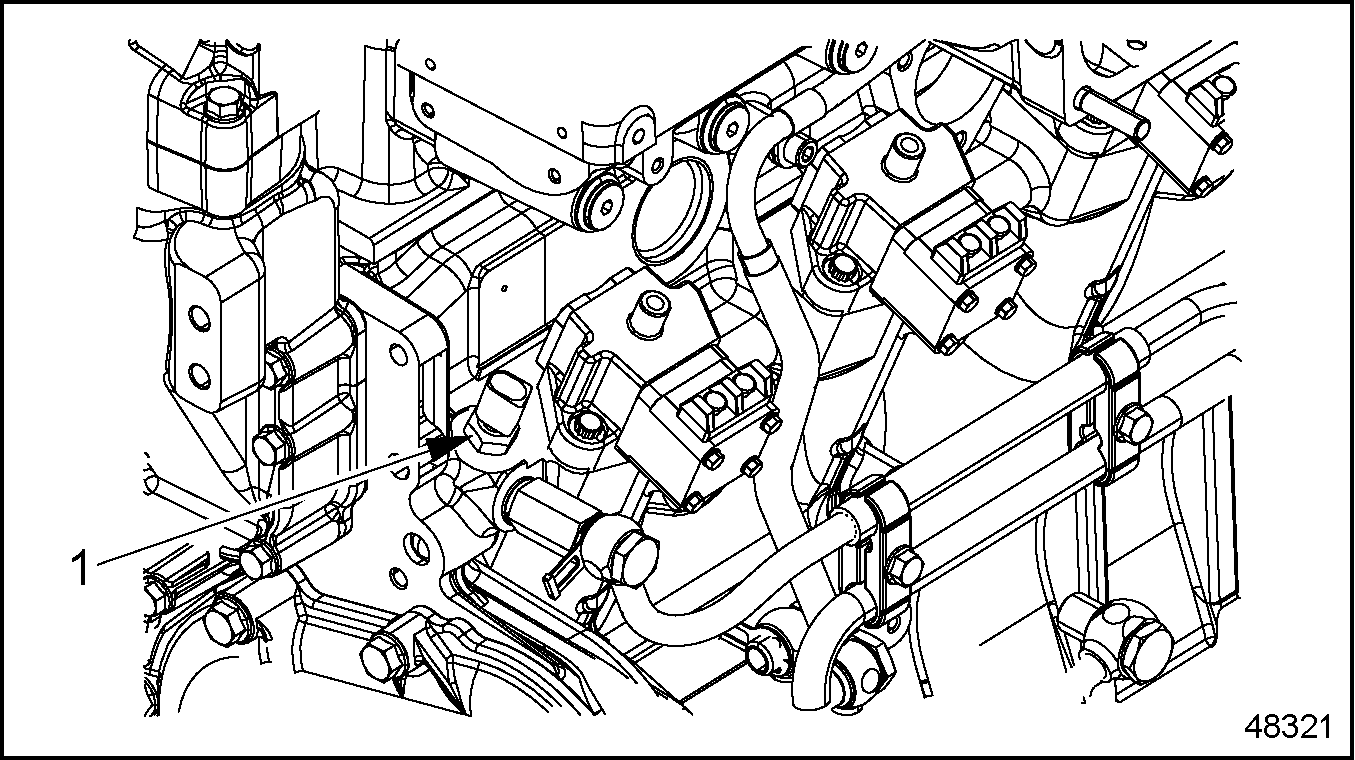
1. Fuel Temperature Sensor
Figure 1. Disconnecting the Sensor
- Install the adaptor and banjo fitting, part of kit (J-46377)
, and high pressure line. See Figure
"Connecting the Adaptor"
.
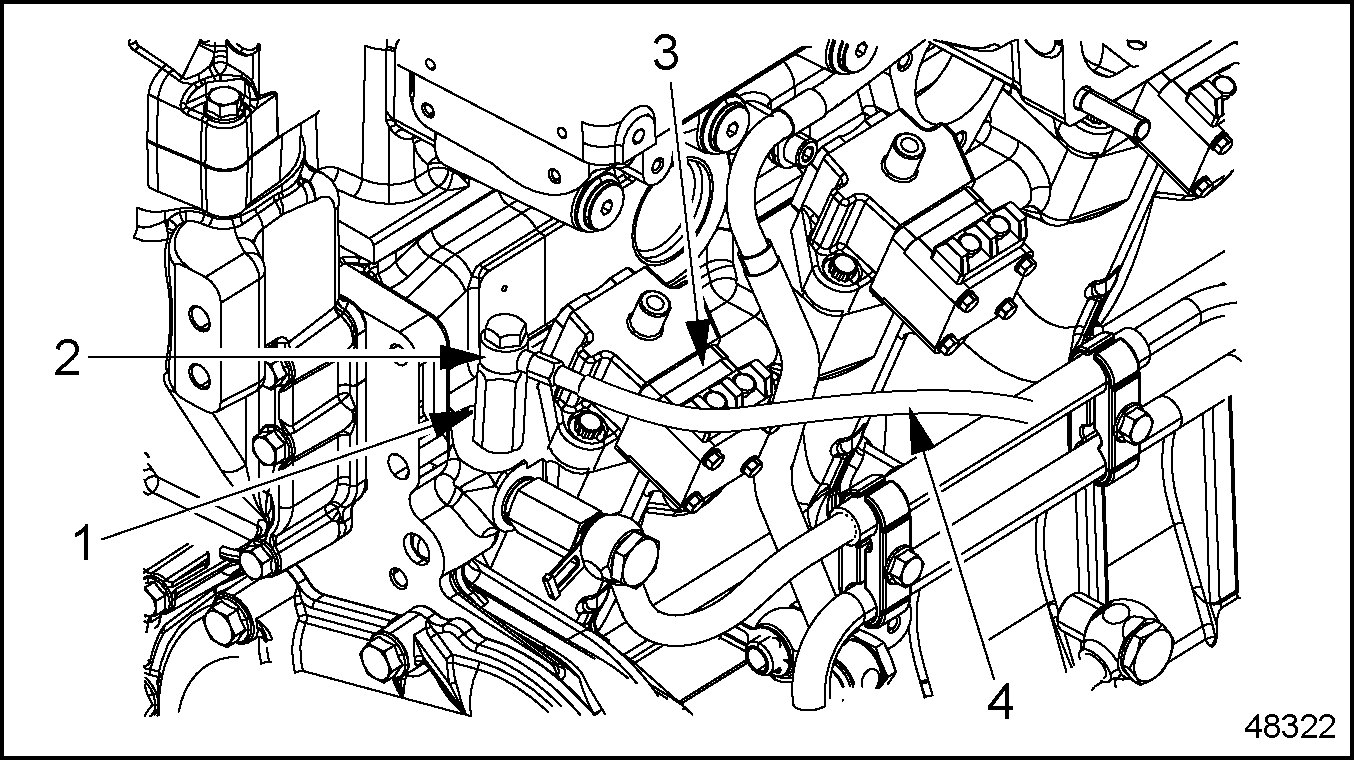
1. Adaptor form Kit J-46377
2. Banjo Fitting
3. Electronic Unit Pump
4. High Pressure Line J-46372
Figure 2. Connecting the Adaptor
- Attach a calibrated gauge (J-46378)
capable of reading 0-100 psi, to the high-pressure fuel line (J-46372)
, leading to the tee-fitting. See Figure
"Connecting the Adaptor"
.

PERSONAL INJURY
To avoid injury before starting and running the engine, ensure the vehicle is parked on a level surface, parking brake is set, and the wheels are blocked.
- Start and run the engine to the speedsRefer to "11.8.2 Charge Air Cooler Replacement"
and record the fuel pressure.
Engine Speed, rpm
Fuel Pressure, kPa (psi)
600-650
430 (62)
2500
400-650 (58-94)
Table 4. Fuel Pressure at Various Speeds - Shut down the engine.
- Remove the adaptor, banjo fitting, high pressure line, and high pressure gauge.
- Reinstall the fuel temperature sensor and new washer. Torque the sensor to 30 N·m (22 lb·ft).
- Connect the electrical connector to the fuel temperature sensor.
- Analyze the measure fuel pressure readings.
- If the fuel pressure is within specifications listed in Table "Fuel Pressure at Various Speeds" , check for high fuel temperature return; refer to "13.4 High Fuel Temperature Return" .
- If the fuel pressure is greater than specifications listed in Table "Fuel Pressure at Various Speeds" , Refer to "13.3.1 Overflow Valve Replacement" .
| EPA07 MBE 4000 DDEC VI Troubleshooting Guide - 6SE568 |
| Generated on 10-13-2008 |