Section 5.3
Monitoring Low Pressure Fuel System Pressures
Determine if you have Version 4 or Version 5 fuel system to use the following procedures.
Section 5.3.1
Low Pressure (Version 4 Fuel System)
This procedure will allow the low pressure fuel system to be monitored by using pressure gauges.
- Drain fuel system. Refer to "6.1 Draining Fuel System Prior to Repairs"
.
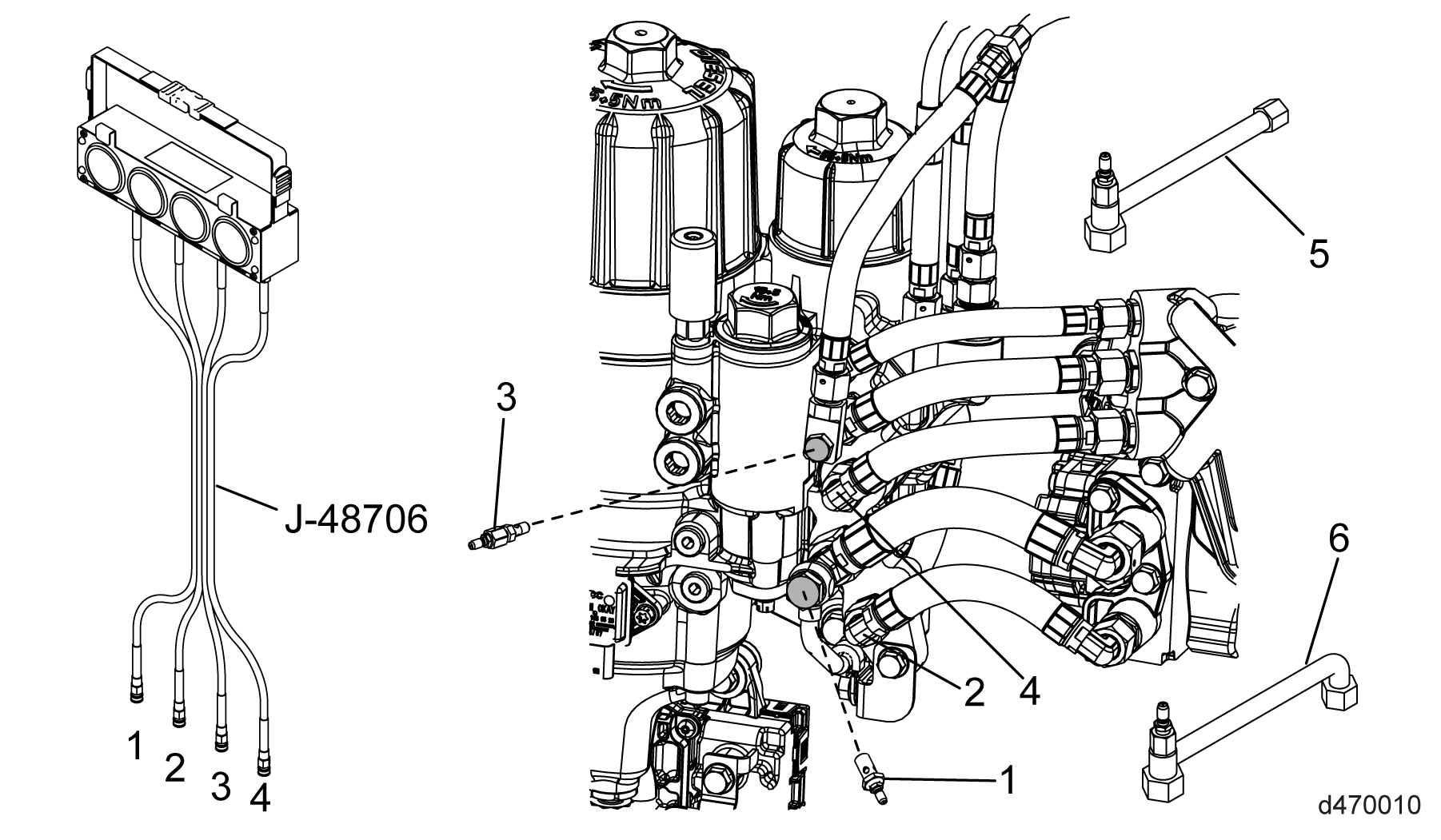
- Remove the low pressure pump return line (2) and install the test line (6) from kit J-48706.
- Remove the high pressure pump return line (4) and install the test line (5) from kit J-48706.
- Remove the banjo bolt from the low pressure pump inlet (1) and install the banjo bolt from kit J-48706.
- Remove the banjo bolt from the high pressure pump inlet (3) and install the banjo bolt from kit J-48706.
- Connect the pressure lines to the appropriate connector.
- Install priming port gauge J-48876.
- Prime the fuel system.
- Start the engine; refer to "5.3.3 Fuel System Pressures" and compare the pressures to the tables found there.
- Remove test equipment.
Section 5.3.2
Low Pressure (Version 5 Fuel System)
This procedure will allow the low pressure fuel system to be monitored using pressure gauges.
- Place a towel or container under the fitting for the low pressure pump out to catch any draining fuel.
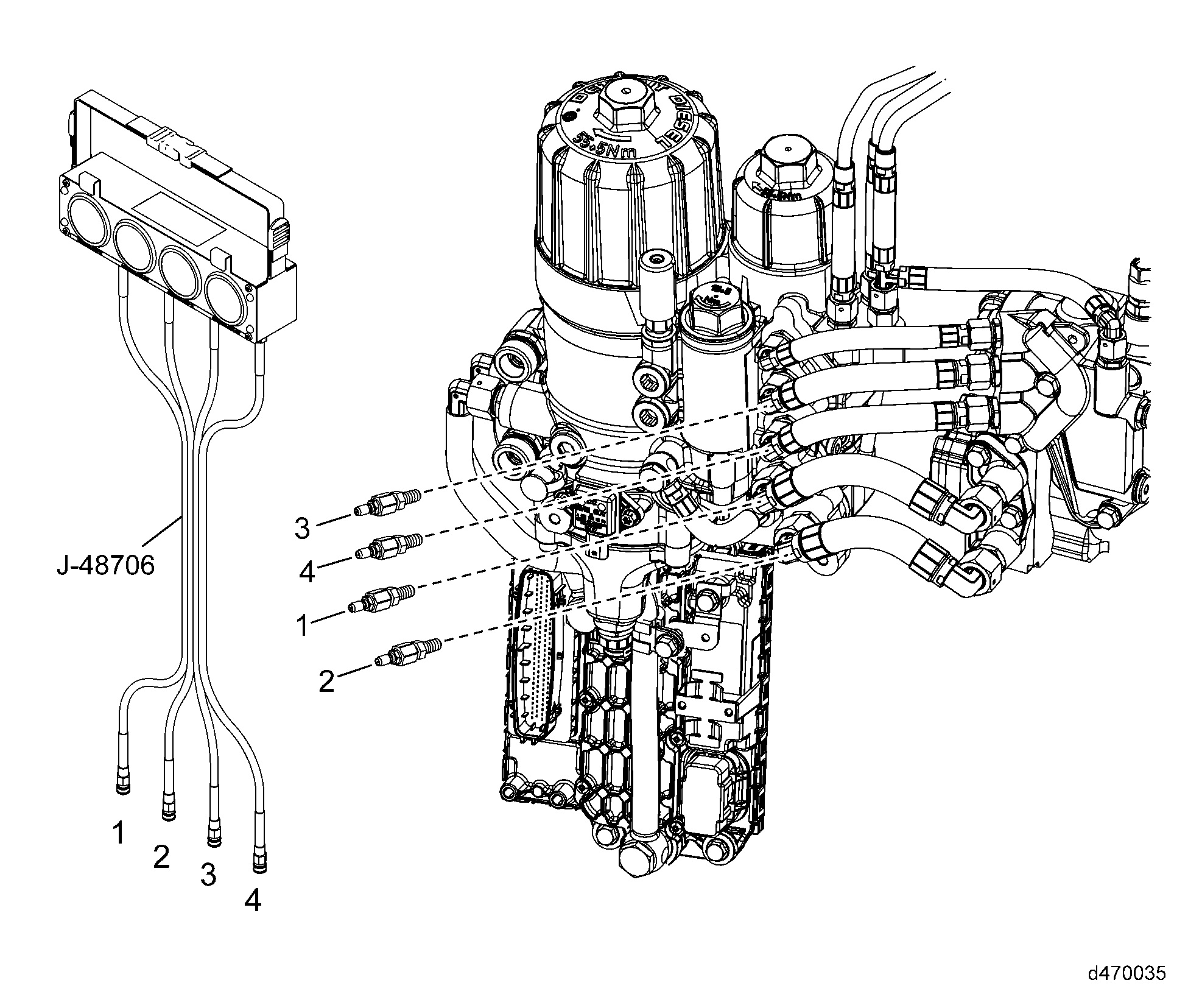
- Remove four 8mm plug fitting in each of the four lines: low pressure pump inlet (1), low pressure pump outlet (2), high pressure pump inlet (3), and high pressure pump outlet (4). Store fittings to be reinstalled when testing is complete.
- Insert four quick disconnect fittings into each of the four fuel line test ports.
- Torque each fitting to 8 Nm (6 ft/lb).
- Install priming port gauge J-48876.
- Prime the fuel system. Refer to "4.1 Engine Will Only Start Using An External Priming Source" .
- Start the engine; refer to "5.3.3 Fuel System Pressures" and compare the pressures to the tables found there.
- Remove test equipment
Section 5.3.3
Fuel System Pressures
Normal and abnormal fuel system pressure are listed in the following tables.
|
Normal System Pressures |
||||
|
|
Cold Engine 600 RPM |
Cold Engine 1800 RPM |
Warm Engine 600 RPM |
Warm Engine 1800 RPM |
|
LPP Inlet (in Hg |
-8 to-9 |
-14 |
-7.5 |
-13.5 |
|
LPP Outlet (PSI) |
78-80 |
104 |
73-74 |
97 |
|
HPP Inlet (PSI) |
74-76 |
87 |
70-71 |
83 |
|
HPP Outlet (PSI) |
2.5 |
4.5 |
2-2.5 |
4 |
|
Priming Port (PSI) |
78-80 |
101 |
72-73 |
94-95 |
|
Abnormal Fuel System Pressures |
||||
|
|
Coalescer (at or past its useful life) |
Final Filter (at or past its useful life) |
||
|
Warm Engine 600 RPM |
Warm Engine 1800 RPM |
Warm Engine 600 RPM |
Warm Engine 1800 RPM |
|
|
LPP Inlet (in Hg) |
-8.5 |
-13.5 |
-5.5 |
-6 |
|
LPP Outlet (PSI) |
82 |
122 |
160+ |
160+ |
|
HPP Inlet (PSI) |
72 |
90 |
65 |
66 |
|
HPP Outlet (PSI) |
3 |
4 |
1-2 |
2 |
|
Priming Port (PSI) |
75 |
105 |
160+ |
160+ |
|
|
Restricted Fuel Feed Line to Module |
Restricted Fuel Return Line From Module |
||
|
Warm Engine 600 RPM |
Warm Engine 1000 RPM |
Warm Engine 600 RPM |
Warm Engine 1000 RPM |
|
|
LPP Inlet (in Hg) |
-12 |
-14.5 |
-4.5 |
-6.5 |
|
LPP Outlet (PSI) |
69 |
80 |
75 |
91 |
|
HPP Inlet (PSI) |
67 |
75 |
72 |
84 |
|
HPP Outlet (PSI) |
1-2 |
1-2 |
4.5 |
5.5 |
|
Priming Port (PSI) |
70 |
80 |
75 |
90 |
|
|
Air in System (connector at line to MCM) |
|
||
|
Warm Engine 600 RPM |
|
|
|
|
|
LPP Inlet (in Hg) |
-1 to -5 (oscillating) |
— |
— |
— |
|
LPP Outlet (PSI) |
14 |
— |
— |
— |
|
HPP Inlet (PSI) |
14 |
— |
— |
— |
|
HPP Outlet (PSI) |
1-2 |
— |
— |
— |
|
Priming Port (PSI) |
14 |
— |
— |
— |
| DD15 Fuel System Technician's Guide - DDC-SVC-MAN-0037 |
| Generated on 10-13-2008 |